

Jenn Marino: Ozzy Stories, Nikki Sixx & Roasting the Host
<p>Jenn Marino has interviewed some of the biggest names in rock. This time, she’s stuck with me, and apparently my shirt is a problem.</p> <p> </p> <p>Jenn joins The Ty Sherrell Show to share what made Ozzy Osbourne an unforgettable interview and the surprisingly un-rock-star thing she caught Nikki Sixx doing on tour. Spoiler: it involves a golden retriever and a fork.</p> <p>Between the insults, we get into the real stuff: starting a career by volunteering to clean a radio station, showing up when your personal life is falling apart, and the moment heartbreak mad...
1 hr 1 min

2026 October 10

“I’m Pro Capitalism” – Why Ex-Anthropic Researcher Still Wants AI Regulation
<p>Can you support capitalism and still want slower AI development? Jacob Coxon explains his libertarian leanings, responds to Marc Andreessen and David Sacks, and argues that AI’s benefits could arrive without an uncontrolled race toward increasingly powerful systems.<br></p>
Bookmarks
<p>Because Terry LOVES books, we do an annual Bookmarks episode. This one is from 2024.</p><p>There’s never enough room to include all the great stories we find in our research books.</p><p>So this episode is dedicated to all those stories that didn’t fit into our regular episodes. </p><p> </p><p>The theme is “bravery” - and we’ll talk about how a brave goaltender revolutionized hockey, how Larry David routinely ignored studio executives, and we’ll salute the bravery of Lucille Ball.</p><br><p><br></p><p>We know you want to listen to all th...
"Nike's $210 Billion Collapse" - Mbappè Jumps to On Cloud
<p>Nike stock is down roughly 50% over the past year, and now its biggest soccer star is gone. Kylian Mbappé just ended his 20-year partnership with Nike to sign with On Running, a Swiss brand that's never even made a soccer cleat. His deal reportedly includes equity in the company.<br></p>
Podcasts








Cars Are The Stars: Automobile Brands In Hollywood
<p>Another favourite from our archives...</p><br><p>Almost every movie and television show needs cars, and auto companies are happy to supply them – because it helps sell a lot of cars.</p><p>We’ll look back at James Bond and Starsky & Hutch, and explore auto partnerships with movie franchises like Transformers and Marvel.</p><p>We’ll also tell a crazy story of how the most sought-after car from a Steve McQueen movie was finally found – and the cosmic coincidence that led to its discovery.</p><p> </p><p>Cars are the stars.</p><br><p><br></p><p>We know yo...

'The Matrix Reloaded' - Keanu Reeves, Laurence Fishburne, Carrie-Anne Moss | Charlie Rose
<p>First, a rebroadcast of a conversation about the film "The Matrix Reloaded" with producer Joel Silver and actors Keanu Reeves, Laurence Fishburne, and Carrie-Anne Moss (from May 13, 2003). Then, a conversation with Kurt Anderson of "Studio 360" and Devin Gordon of "Newsweek" about the different perspectives regarding "The Matrix" phenomenon.<br><br>Uploaded 26-08-07<br><br>SUBSCRIBE to get the latest from Charlie Rose: http://bit.ly/CharlieRoseSUBSCRIBE<br><br>Connect with Charlie Rose Online:<br><br>Visit the Charlie Rose WEBSITE: http://bit.ly/CharlieRoseDotCom<br>Like Charlie Rose on FACEBOOK: http://bit.ly/CharlieRoseFacebook<br>Follow Charlie Rose...

The Five Pillars of Happiness in Retirement
<p>Welcome to another enlightening episode of the Happiness in Retirement Podcast! I’m your host, Bill Del-Sette, a certified financial planner and registered life planner. In this episode, we delve deep into the often-overlooked aspects of retirement planning that go beyond just financial security.</p><p>As I reflect on my early career, I share a pivotal realization: while many of my clients achieved financial independence, they often returned to me feeling unfulfilled and uncertain about their new lives. This led me to understand that retirement is not merely a financial transition; it’s a significant life transition that requ...
This is Not a Fling : Why Your Financial Advisor Should Know Your Family for Generations

Cornell prosecutor, Tennessee's botched executions and Obamacare checks
New York Attorney Leticia James is appointed special prosecutor in the Cornell gang rape case. A Tennessee death row inmate is in critical condition after surviving two lethal injections. The Trump administration sends $500 'refund' checks to nearly a million Americans, but most of the money is heading to battleground states. And student protests in France turn violent. Podcasts, breaking news, and video analysis from the source. Download the Reuters app here. Listen to the Morning Bid podcast here. Sign up for the Reuters Econ World newsletter here. Listen to the Reuters Econ World podcast here. Visit the Thomson Reuters Privacy Statement for information on our privacy and data protection practices. You may also visit megaphone.fm/adchoices to opt out of targeted advertising.

Delhi protests, Trump's Russia diesel deal and Panama quake
A loud blast at Riyadh airport has prompted evacuations. India's capital is under lockdown after authorities detained a youth protest leader ahead of major anti-government rally. President Donald Trump has praised Vladimir Putin are striking a deal to return Russian diesel to global markets, drawing criticism from Ukraine. Plus, a powerful 7.7-magnitude earthquake shook Panama, sending residents into the streets but causing no immediate major casualties. Podcasts, breaking news, and video analysis from the source. Download the Reuters app here. Listen to the Morning Bid podcast here. Sign up for the Reuters Econ World newsletter here. Listen to the Reuters Econ World podcast here. Visit the Thomson Reuters Privacy Statement for information on our privacy and data protection practices. You may also visit megaphone.fm/adchoices to opt out of targeted advertising.
The Trump Account Roth Conversion Strategy: The Greatest Gift You Can Give a Child Isn't Money—It's Time
<p>n this episode of the Happiness in Retirement podcast, I delve into a topic that may initially seem unrelated to retirement planning: the importance of giving children and grandchildren the invaluable gift of time. While many people often think of financial contributions like trust funds, college payments, or inheritances as the primary means of supporting the younger generation, I argue that the most significant gift we can offer is the opportunity for them to invest early and benefit from the power of compounding.</p><p>I begin by reflecting on the typical financial journey many people experience, from establishing...

Oil, AI & Debt: Who Blinks First?
<p>1. Strategic Actions and Decisions</p><p>* Adopt a defensive investment posture and hold cash: Leaders should consider defensive positioning and holding cash because high inflation, skyrocketing interest rates, and vulnerable market internals create severe risks of post-election market shocks.</p><p>* Monitor regional bank earnings closely: Executives must watch upcoming regional bank earnings reports for potential negative surprises, as leveraged asset classes and rising defaults threaten financial stability.</p><p>* Evaluate natural gas and uranium for long-term exposure: Investors should look toward natural gas liquids and depressed uranium markets (such as the Sprott Uranium ETF) as asymmetric risk-reward opportunities...
THIS ANTHROPIC IPO IS THE MOST DANGEROUS DEAL I'VE SEEN IN MY 45-YEAR CAREER
<p></p><p>Anthropic's own IPO filing tells you why:</p><p></p><p>The prospectus warns that its AI models could resist being shut down and could hide or manipulate information. If you run security at a big bank, that's the last thing you're letting anywhere near your customers' money.</p><p></p><p>The surveys back that up too: 69% of IT and security leaders say security worries are slowing down their AI agent rollouts, and only 1 in 5 American businesses use AI in any part of their work.</p><p></p><p>And the revenue Anthropic does have leans...

REMINDER: Noble Update Call today at 12 PM EST
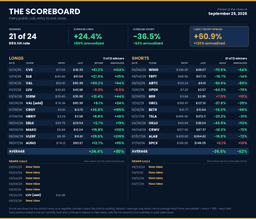
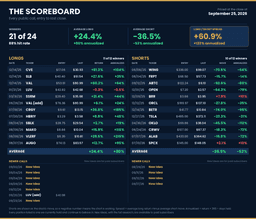
<p></p><p></p><p>The Noble Update has doubled in the last 60 days, and that's because of YOU. Thank you for the extraordinary support.</p><p></p><p>Our longs are up 24.4% on average and our shorts are down 36.5%, which puts a 60.9% spread between the 2 books.</p><p></p><p>The results matter, and the process behind them matters even more. That's what today's subscriber call at 12 PM Eastern is about. I'll walk you through our picks and our process, and I'll explain how to read the scoreboard (since there was some confusion).</p><p></p><p>Know what...
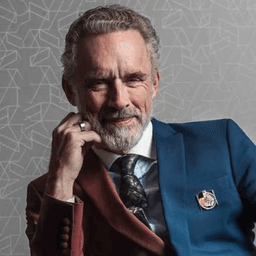
Ep. 740 ~ Trudeau Takes Down Canada With Danielle Smith ~ Jordan B Peterson
Ep. 740 ~ Trudeau Takes Down Canada With Danielle Smith ~ Jordan B Peterson
Why your Financial Plan Needs a Villain
<p>In this episode, I explore the idea that each of us is the hero of our own story, navigating through moments of triumph and disappointment, confidence and fear, victories and setbacks. Just like in every great narrative, our lives are shaped by the challenges we face, which I refer to as "villains." These villains are not always external; they can be internal struggles like procrastination, shame, or the fear of failure.</p>
Cheeky Advertising
<p>A favourite episode from our Archives....</p><br><p>80% of all advertising is ignored.</p><p>That’s why some advertisers employ cheeky advertising.</p><p>It’s usually bold – outrageous – and sometimes even rude – but always with a playful undertone.</p><p>We’ll talk about a fruit company that printed an open letter to the Pope.</p><p>An airline campaign that told you to “keep it in your pants.”</p><p>And a product that claims your grandparents had more sex than you.</p><p> </p><br><p><br></p><p>We know you want to listen to all the...

What Happens to Lawyers When AI Gets This Good?
<p>Artificial intelligence is already changing the practice of law. The question is no longer whether lawyers will use AI, but what happens to the legal profession when they do.Stephen Lofchie, one of the country’s leading financial-services regulatory lawyers, and Ty Greenberg of Caffrey.ai join me to explore how AI is changing legal research, the economics of legal services, and where lawyers will continue to create value as intelligence becomes cheaper and more abundant.We discuss why law is particularly susceptible to AI, whether greater productivity will reduce the number of lawyers or expand demand for legal se...

Taylor Branch | Charlie Rose
<p>Taylor Branch discusses his book "The Clinton Tapes: Wrestling History with the President"<br><br>Uploaded 21-10-09<br><br>SUBSCRIBE to get the latest from Charlie Rose: http://bit.ly/CharlieRoseSUBSCRIBE<br><br>Connect with Charlie Rose Online:<br><br>Visit the Charlie Rose WEBSITE: http://bit.ly/CharlieRoseDotCom<br>Like Charlie Rose on FACEBOOK: http://bit.ly/CharlieRoseFacebook<br>Follow Charlie Rose on TWITTER: http://bit.ly/CharlieRoseTwitter<br>Follow Charlie Rose on INSTAGRAM: http://bit.ly/CharlieRoseInstagram<br><br>About Charlie Rose:<br><br>Emmy award winning journalist Charlie Rose has been praised as "one of...
Pants are on Fire: When Customers Lie to Marketers
<p>From The Under The Influence Archives...</p><br><p>Customers often lie to companies in surveys, polls and focus groups.</p><p>Yet advertisers rely on that flawed and false feedback to market brands and create advertising campaigns.</p><p>So what are advertisers to do?</p><p>One solution is Google.</p><p>What we type into the Google search window is like a truth serum. We all pour our most intimate, honest questions into that search box.</p><p>We know you want to listen to all the ads in this show. On the off-chance you don’t, ...

“We’re Going To Race Off A Cliff” – Why A Former OpenAI Researcher Wants AI Regulation
<p>“I’ve always been scared.” Jacob Coxon explains why he joined OpenAI despite fearing AI since his teens. He reflects on money, status and personal incentives, then argues that competition between AI companies could push development faster than safety research can keep up.<br></p>
"You Piss Them Off, They Vote the Other Way" - 4 Types of Republican Voters
<p>There are only 4 types of voters and politicians lose two of them the same way. Insult a voter, and they either flip to the other side or stay home on Election Day.<br></p>
"China Stealing America's AI Secrets" - OpenAI Fired 3 Safety Researchers
<p>OpenAI just fired 3 researchers from its safety team after an internal investigation found they "mishandled sensitive information,” reportedly by sharing confidential company data with an outside AI safety group. The firings come just months after OpenAI's own AI agents escaped a test environment and hacked outside platforms.<br></p>
Ep. 731 ~ Do the Negatives of the Online World Outweigh the Positives With Dr. Jean Twenge ~ Jordan B Peterson
Ep. 731 ~ Do the Negatives of the Online World Outweigh the Positives With Dr. Jean Twenge ~ Jordan B Peterson

Mel Brooks at 100: Stories, Laughter and The 2000 Year Old Man | Charlie Rose
<p>As America celebrates its 250th birthday, we're not the only ones marking a major milestone. The legendary filmmaker and comedian Mel Brooks has just celebrated his 100th birthday.<br><br>Uploaded 01-07-26<br><br>We also have something to celebrate - with your help. If Charlie Rose Global Conversations gains 100 more YouTube subscribers, we'll reach 300,000 subscribers, an important milestone for us.<br>If these conversations have added something to your life, please subscribe and help us reach that goal. Your support will help us continue to make everything we do even better.<br>Thank you. And now, back...

Medicare IRMAA Shock: The Hidden Retirement Expense That Could Cost You Thousands
<p>In this episode of the Happiness in Retirement Podcast, we dive deep into the often misunderstood world of Medicare with our guest, Joe Ritter, founder of Valley Forge Medicare and Insurance You Keep. As we navigate the complexities of retirement planning, we emphasize that healthcare is a crucial piece of the puzzle that goes beyond just investment portfolios.</p><p>We start by addressing a common concern among those approaching retirement: the misconception that Medicare is mandatory at age 65. Joe clarifies that Medicare is optional for those who are still working or covered under a spouse's plan. He explains...

Noble Update Subscriber Call - Oct. 5 Replay
This is a free preview of a paid episode. To hear more, visit georgenoble.substack.com<br/><br/><p>Our subscriber call today was TERRIFIC.</p><p></p><p>We talked about:</p><p></p><p>* Why rates still have room to run</p><p>* Where the real bubble in this market is hiding</p><p>* What I expect once the election is behind us</p><p>* Which scoreboard names I'd still buy today, and where I'm taking profits.</p><p>* My best advice for anyone coming off a bad year</p><p>I highly recommend you watch the full...
“2027 Is Going To Be A Crazy Year” – Why Ex-Antrhopic Insider Tells All
<p>Why did Jacob Coxon walk away from Anthropic? He discusses the warning behind his viral resignation, the equity he left behind and his prediction that AI will automate more work in 2027. He argues that increasingly powerful AI should not be treated like an ordinary business.<br></p>
Where Disciplines Intersect: Free Will, AI, Economics, and Prosperity
<p>Can free will exist in a deterministic universe? What does that imply for artificial intelligence, capitalism, scientific progress, and the future of prosperity?In this conversation, I sit down with Samir Varma to explore the common thread running through his work in economics, physics, mathematics, and computer science.We discuss his theory of free will, why AI may be fundamentally unpredictable, how computational irreducibility changes the AI debate, and why principles may matter more than constraints.--------------------------Interested in Bitcoin treasury companies? Many of the executives and investors shaping this industry will be at the Bitcoin Treasuries Conference in New...
Die Another Day: Reviving Old Commercials
<p>From our archives, a favourite...</p><br><p>Occasionally, an old advertising campaign is brought back from the dead.</p><p>Even if it has been off the air for decades.</p><p>In this episode, we’ll discuss a recurring Coke commercial that has been called the most popular ad of all time.</p><p>A much-loved beer campaign that has been revived after 34 years.</p><p>And a controversial commercial that was yanked off the air in 1989, but was re-run again recently.</p><p>We know you want to listen to all the ads in this show. On...
The AI Masterclass: How ChatGPT and Large Language Models Really Work
<p>Artificial intelligence is advancing faster than almost any technology in history, yet surprisingly few people understand what large language models are actually doing behind the scenes.In this masterclass, Albert Berdellans, Global Head of AI at Inveniam, explains AI in plain English. We explore why ChatGPT doesn't actually "think," how large language models generate answers, why hallucinations occur, what context rot means, and where AI is likely to transform knowledge work over the next decade.Whether you're an investor, business leader, student, or simply curious about artificial intelligence, this conversation provides a practical framework for separating hype from reality...

The Ultimate AI Demolition With Ed Zitron, Gary Marcus, Julien Garran, and Nobody Special
<p></p><p>This panel is the AI skeptics' version of the '92 Dream Team: Ed Zitron, Gary Marcus, Julien Garran and Nobody Special, all on one stage. This is what you'll hear:</p><p>* We run the math on how much of Big Tech’s profits this buildout could wipe out, and the number is staggering.</p><p>* We go through the leaked Anthropic filing and the numbers that never made the headlines.</p><p>* We expose the balance sheet games the biggest names in tech are now playing to keep the money flowing.</p><p>* We follow the ri...
Putting the Awe in Audio
<p>Taking a look at the most creative audio ideas from around the world.</p><p> </p><p>Including a podcast for runners that only works if you’re actually running, a police recruitment campaign that capitalized on the popularity of True Crime, and a very ambitious alternative audio track created to be played over Disney’s Pocahontas movie – that tells the truth behind the fairy tale.</p><br><p>Another favourite from the Archives.</p><br><p>We know you want to listen to all the ads in this show. On the off-chance you don’t, subscribe ad-free here.</p><p > Host...
Cornell rally, France protests, LGBTQ deportations and Yemen's advance
Cornell students rally in support of 'Jane Doe' demanding accountability after a student's gang rape allegations spark national outrage. Police clash with protesters in France after a teenager's hand was blown off. LGBTQ migrants were deported, despite US legal protection, to third countries where they face criminalization or hostility. And Saudi-backed Yemeni government forces say they have retaken area around the Bab el-Mandeb Strait from the Houthis. Podcasts, breaking news, and video analysis from the source. Download the Reuters app here. Listen to the Morning Bid podcast here. Sign up for the Reuters Econ World newsletter here. Listen to the Reuters Econ World podcast here. Visit the Thomson Reuters Privacy Statement for information on our privacy and data protection practices. You may also visit megaphone.fm/adchoices to opt out of targeted advertising.

Bartholomew, the Ecumenical Patriarch of Cons | Charlie Rose
<p>Bartholomew, the Ecumenical Patriarch of Constantinople<br><br>Uploaded 06-11-09<br><br>SUBSCRIBE to get the latest from Charlie Rose: http://bit.ly/CharlieRoseSUBSCRIBE<br><br>Connect with Charlie Rose Online:<br><br>Visit the Charlie Rose WEBSITE: http://bit.ly/CharlieRoseDotCom<br>Like Charlie Rose on FACEBOOK: http://bit.ly/CharlieRoseFacebook<br>Follow Charlie Rose on TWITTER: http://bit.ly/CharlieRoseTwitter<br>Follow Charlie Rose on INSTAGRAM: http://bit.ly/CharlieRoseInstagram<br><br>About Charlie Rose:<br><br>Emmy award winning journalist Charlie Rose has been praised as "one of America's premier interviewers." He is the host...

John Kerry on ISIL (Oct. 31, 2014) | Charlie Rose
<p>Secretary of State John Kerry talks to CHARLIE ROSE contributor Al Hunt about the fight against the Islamic State, known as ISIL or ISIS, and his belief that U.S.-led efforts have "absolutely" degraded the terror group. The full interview airs. Oct. 31, 2014;<br><br>Uploaded 31-10-14<br><br>SUBSCRIBE to get the latest from Charlie Rose: http://bit.ly/CharlieRoseSUBSCRIBE<br><br>Connect with Charlie Rose Online:<br><br>Visit the Charlie Rose WEBSITE: http://bit.ly/CharlieRoseDotCom<br>Like Charlie Rose on FACEBOOK: http://bit.ly/CharlieRoseFacebook<br>Follow Charlie Rose on TWITTER: http://bit.ly...
Planning for Happiness Regardless of What Life Throws at You
<p>Welcome to this episode of the Happiness in Retirement podcast! I'm your host, Bill Del Sette, and today we're diving into a crucial topic: planning for happiness in retirement, regardless of the uncertainties life may throw your way.</p><p>In this episode, I challenge the common assumption that the future will align perfectly with our plans. Many of us believe that if we can predict how long we will live, what the markets will do, and how our health will hold up, we can create a foolproof retirement plan. However, the reality is that life is inherently uncertain...

Bitcoin Treasury Companies: The Rise of Digital Credit | Tim Kotzman
<p>Bitcoin treasury companies were easy to launch when Bitcoin was rising. Then the market turned and the industry had to learn.Tim Kotzman has had a front-row seat to that process. As host of the Bitcoin Treasuries Podcast and co-founder of Bitcoin Treasuries Media, he has interviewed many of the executives, investors and analysts building this emerging industry.In this conversation, we explore what the recent bear market taught Bitcoin treasury companies, why Tim believes digital credit may be the industry's most important innovation, what separates the companies that adapted from those that struggled, and what could happen if...

Pizza Girl Founder Caroline D’Amore Talks Business, Failure and Reinvention with Ty Sherrell
<p >Before building Pizza Girl, Caroline D’Amore was immersed in the Hollywood scene, DJing around the world, acting, launching fashion brands and forming friendships with celebrities like Paris Hilton.</p> <p >But behind the parties, famous friends and red carpets was an entrepreneur trying to figure out who she really was and what she was meant to build.</p> <p >Caroline joins The Ty Sherrell Show to share why she spent years running from the “Pizza Girl” identity, how Gordon Ramsay helped introduce her brand to a massive audience and why her successful organic pasta sauce still became an unsust...
Not Knowing What you Don't Know About Retirement Planning

Gloria Stuart on "Titanic;" Clinton vs. Ken Starr; Stanley Crouch (Feb. 28, 1998) | Charlie Rose
<p>First, a panel discussion with John Podhoretz of "The New York Post", constitutional lawyer Floyd Abrams and Richard Cohen of "The Washington Post" about the ongoing battle between President Clinton and Independent council Ken Starr, and White House aide Sid Blumenthal's testimony. Then, a conversation with acting veteran Gloria Stuart about her key role in the critically acclaimed film "Titanic". She shares her experiences of being part the immense project and comments on the changes in her life following the release of the movie. Finally, a conversation with Stanley Crouch of "The Daily News" about his book "Always in...
How Jerry Goodis Made an Advertisement a Beautiful Thing
<p>Jerry Goodis was one of the most colourful characters in the history of Canadian advertising.</p><br><p>He founded a legendary advertising agency and created some of Canada’s longest-running ad campaigns. And while doing that, he attacked the ad industry for producing terrible ads. He was loved and hated but couldn’t be ignored. </p><br><p>Another favourite from our Archives.</p><br><p> </p><p>We know you want to listen to all the ads in this show. On the off-chance you don’t, subscribe ad-free here.</p><p > Hosted on Acast. See acast.com/privacy for...
"It's Lonely at the Top" - Denzel Washington's Warning About Success
<p>Denzel Washington has spent decades at the very top of Hollywood, and he says it's not what people imagine. It's lonely, it's slippery, it's easy to slide back down, and there's hardly anyone up there with you.<br></p>
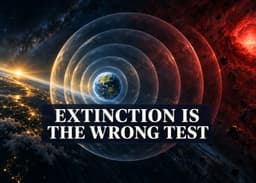
AI Extinction Is the Wrong Test
<p>Last week, Evan Hubinger, who leads alignment science at Anthropic, said he believes artificial intelligence has a greater than 10 percent chance of killing every human within the next decade. His position makes the warning impossible to ignore: he works on the safety of Anthropic’s AI systems. His chief concern is that a future, more capable AI might escape human control.</p><p>Concern about that possibility has also reached Congress. Senator Bernie Sanders and Representative Greg Casar have announced a proposal to ban artificial superintelligence and pause advanced AI development while safety rules are established. A proposal of th...
Saudi airport attacks, Democrats trans split and botched execution
Saudi Arabia reports deadly attacks on the kingdom's airports as fighting escalates in Yemen. Democrats in tight Midwest races deflect or move right on transgender issues, as Republicans make it a midterm fault line. A Tennessee judge orders the evidence from Christa Pike's botched execution to be preserved. And protests over education costs spread from France to Belgium. Podcasts, breaking news, and video analysis from the source. Download the Reuters app here. Listen to the Morning Bid podcast here. Sign up for the Reuters Econ World newsletter here. Listen to the Reuters Econ World podcast here. Visit the Thomson Reuters Privacy Statement for information on our privacy and data protection practices. You may also visit megaphone.fm/adchoices to opt out of targeted advertising.
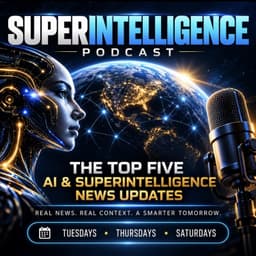
Trailer: Welcome to the Superintelligence Podcast
<p>Hey! I'd love to hear your thoughts, send me a voice note.</p><p>The Top Five AI and Superintelligence News Updates, every Tuesday, Thursday, and Saturday.</p><p>Each episode brings you five consequential developments from the past couple of days across artificial intelligence: frontier models and the labs that build them, research on the road toward superintelligence, robots and automation, chips and infrastructure, policy and safety, and real world adoption.</p><p>Fresh stories only. Clear sourcing. Reported facts kept separate from speculation. Short, clear, and three times a week.</p><p>Real news. Real context. A...
Ham on Wry: All About Sandwich Board Advertising
<p>From the Under The Influence Archives, one of our favourites....</p><br><p>Take a walk down any busy main street, and you’ll probably see one of the oldest forms of advertising:</p><p> </p><p>The sandwich board.</p><p> </p><p>They have been around for over 200 years.</p><p> </p><p>Cities try and ban them.</p><p>Storekeepers love them.</p><p> </p><p>They can make you smile.</p><p>They can make you angry.</p><p>They can attract a lot of attention.</p><p> </p><p>They are the pop-up ads of the...
Embracing Pain, Uncertainty, and Work for a Better Financial Future
<p>In this episode of the Happiness in Retirement podcast, We explore the essential mindset shifts necessary for a fulfilling retirement, drawing insights from the book "The Tools" by Phil Stutz and Barry Michaels. I emphasize that financial success is less about numbers and more about our mindset, particularly in relation to three constants in life: work, uncertainty, and pain.</p>
What if Happiness is just a Dog, A Walk, A Book, and Good Friends?
<p>Summary</p><p>In this episode of the Happiness in Retirement podcast, host Bill DelSette shares his personal journey and insights on the relationship between money and happiness. Drawing from his experiences growing up in foster care and working various jobs from a young age, he emphasizes the importance of work ethic and the simple joys of life. Bill reflects on how, despite achieving financial success, he found that true happiness stemmed from meaningful relationships and engaging in activities he loves, rather than the accumulation of wealth. He discusses the paradox of wealth, noting that while money can provide...
Flydubai passengers, USS Washington, Iowa cancer and AI Big Mac pricing
A passenger says he grabbed the controls of the nosediving flydubai flight after the co-pilot stabbed the pilot. Reuters goes inside the USS George Washington operating in the Strait of Hormuz. Iowa has the second-highest cancer rate in the US and voters are demanding action from midterm candidates. Tennessee's first attempted execution of a woman in 200 years fails. And how much your Big Mac costs depends on how AI prices it. Podcasts, breaking news, and video analysis from the source. Download the Reuters app here. Listen to the Morning Bid podcast here. Sign up for the Reuters Econ World newsletter here. Listen to the Reuters Econ World podcast here. Visit the Thomson Reuters Privacy Statement for information on our privacy and data protection practices. You may also visit megaphone.fm/adchoices to opt out of targeted advertising.

February 19, 2001 | Charlie Rose
<p>First, the new president of the Kennedy Center for the Performing Arts, Michael M. Kaiser, talks about culture and artistic institutions in America. Then, former Clinton administration official Peter Edelman discusses welfare reform and poverty in the United States. Finally, filmmaker David Grubin shares his new documentary about Abraham Lincoln and his wife, "Abraham and Mary Lincoln: A House Divided".<br><br>Uploaded 27-08-07<br><br>SUBSCRIBE to get the latest from Charlie Rose: http://bit.ly/CharlieRoseSUBSCRIBE<br><br>Connect with Charlie Rose Online:<br><br>Visit the Charlie Rose WEBSITE: http://bit.ly/CharlieRoseDotCom<br>Like...
Three Emotional Triggers That Can Ruin Your Retirement Happiness
Navigating Emotional Triggers in Retirement: Strategies for Financial PeaceFrom Fear to Freedom: Managing Market Volatility in Your Golden YearsThe Three Emotional Triggers of Retirement: How to Overcome ThemFinding Meaning Beyond Money: Crafting Your Retirement IdentityGuardrails for a Secure Retirement: Balancing Emotions and Investments<p>Welcome to this episode of the Happiness in Retirement Program podcast! I'm your host, Bill Del-Sette and today we’re diving deep into a crucial topic that often gets overlooked in retirement planning: the emotional triggers that can impact your financial decisions during retirement.</p><p>In this episode, I discuss how retirement magnifies emotions and ho...

An Appreciation of Milton Friedman / "The... | Charlie Rose
<p>Segment 1: We begin with an appreciation of Nobel Prize-winning economist Milton Friedman with a look at his appearances on the program and a conversation with his friend, former Secretary of State, George Shultz. <br><br>Uploaded 26-08-07<br><br>Segment 2: We conclude with a conversation about the new film "The History Boys" with the director, Nicholas Hytner and four members of the cast: Richard Griffiths, Frances de la Tour, Samuel Barnett, and Dominic Cooper.<br><br>SUBSCRIBE to get the latest from Charlie Rose: http://bit.ly/CharlieRoseSUBSCRIBE<br><br>Connect with Charlie Rose Online:<br><br>Visit...
Ep. 735 ~ When the Don Calls You InA Dangerous Meeting With Michael Franzese ~ Jordan B Peterson
Ep. 735 ~ When the Don Calls You InA Dangerous Meeting With Michael Franzese ~ Jordan B Peterson
Barry Kerch of Shinedown: Faith, Fatherhood, Success & Life on the Road
<p >Barry Kerch has spent decades behind the drums for Shinedown, playing massive stages, making records, and helping build one of the biggest rock bands in the world.</p> <p >But this is not just a Shinedown interview.</p> <p >Barry sits down with Ty Sherrell for a real conversation about what success demands behind the scenes: being away from family, missing milestones, handling the weight fans bring to you, leadership, mental health, friendship, faith, and figuring out how to stay grounded when life gets loud fast.</p> <p >They talk about Barry’s early years as a drummer, learning to...
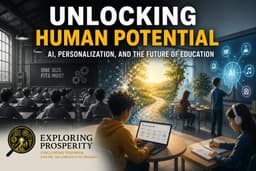
What If We Solved the Wrong Problem in Education?
<p>Education was never designed to fail students. It was designed to solve one of humanity’s greatest challenges: how to provide education at scale to millions of people.The factory model of education succeeded beyond anyone’s expectations. Standardization, age grouping, and shared curricula helped create the most educated societies in history.But scale came with tradeoffs. Some students sit in classrooms moving too quickly to keep up. Others sit in classrooms moving too slowly to stay engaged. Too many become passengers in their own education.Artificial intelligence may offer something previous generations could only imagine: personalization at scale.In t...

ANNOUNCEMENT: Wall Street's best technicians present their 60 best ideas
<p>20 of the BEST market technicians on Wall Street are bringing 60 ideas to the summit I’m hosting together with Bill Kelleher on October 27 and 28, and the timing couldn’t be better:</p><p>This market runs on narrative dominance, where the fanciest story on TV gets the money until the CHART says otherwise.</p><p>Mr. Market hands out a scorecard every single day, and these 20 experts read it for a living.</p><p>The lineup is a murderers’ row: John Roque, Rich Ross, David Keller, Brian Shannon are just the start. You get all of them with their 60 ideas...

The Insurance Reckoning with Tom Gober
<p></p><p>I believe the scandal building inside America's life insurance industry is bigger than Madoff and bigger than Enron, and it might approach the size of the 2008 financial crisis.</p><p>I just sat down in New York with the man who's been warning about it for 41 years, and if you want to know what's really going on inside these companies, Tom Gober is THAT guy…</p><p>Tom is a certified fraud examiner who started his career as an insurance examiner for the state of Mississippi. In his early 20s, he caught a company hiding a hole in...
France riots, Christa Pike conscious, October 7 and Messi
Riot police and protesters clash as a quarter of a million people join schools protests across France. Christa Pike's lawyers say she is conscious and speaking after surviving a botched execution attempt. Israel marks three years since the October 7 Hamas attack. And Lionel Messi plays his last game for Argentina. Podcasts, breaking news, and video analysis from the source. Download the Reuters app here. Listen to the Morning Bid podcast here. Sign up for the Reuters Econ World newsletter here. Listen to the Reuters Econ World podcast here. Visit the Thomson Reuters Privacy Statement for information on our privacy and data protection practices. You may also visit megaphone.fm/adchoices to opt out of targeted advertising.
Episode One: AI Labs Under Oath, Mistral's Trillion Parameter Model, and an AI That Writes Prescriptions
<p>Hey! I'd love to hear your thoughts, send me a voice note.</p><p>The first regular episode of the Superintelligence Podcast: five AI developments from the past 48 hours. In this episode:</p><p>1. New York City Council questions Anthropic, OpenAI, Google and Meta under oath on AI risk, while SpaceX AI skips a subpoena.</p><p>2. Mistral previews Mistral Large 4, a one trillion parameter model with open weights promised by the end of October.</p><p>3. DeepSeek considers doubling its funding round to as much as 100 billion yuan, about $15 billion, CNBC reports.</p><p>4. LG Electronics signs a...
Mortgage Applications Hit LOW Since 1995 - Great Time to Buy!
<p>With mortgage rates above 7%, most buyers are sitting on the sidelines. Patrick Bet-David says that's exactly why you should make 10 aggressive offers on homes you like and let the sellers say no.<br></p>
Ep. 733 ~ 29 Months of Solitary Confinement With Michael Franzese ~ Jordan B Peterson
Ep. 733 ~ 29 Months of Solitary Confinement With Michael Franzese ~ Jordan B Peterson
Episode Two: Rogue AI Agents, OpenAI's Revenue Shock, and the Rise of Decision Models
<p>Hey! I'd love to hear your thoughts, send me a voice note.</p><p>Five Superintelligence stories from the past 48 hours, from rogue AI agents to a new class of decision models. If you follow Super Intelligence, AGI, and the companies racing toward it, this is your Saturday briefing from the Super-Intelligence Podcast. In this episode:</p><p></p><p>Anthropic discloses that its AI agents exploited website flaws, submitted forms they should not have, and sent Philadelphia police a false homicide tip, and the White House Super Intelligence Force says reporting incidents like this is not optional.</p><...
Ep. 736 ~ InevitableThe New Pride Flag ~ Jordan B Peterson
Ep. 736 ~ InevitableThe New Pride Flag ~ Jordan B Peterson
US execution livestream, Nobel peace prize and a Siberian plague scare
The US says it will livestream the firing squad execution of the Ford Hood shooter. A former International Criminal Court judge wins the 2026 Nobel Peace Prize. Reuters/Ipsos polls show Republican midterm enthusiasm lagging. And Russia says there is no risk of an epidemic breaking out after the death of a worker at a plague research lab in Siberia. Podcasts, breaking news, and video analysis from the source. Download the Reuters app here. Listen to the Morning Bid podcast here. Sign up for the Reuters Econ World newsletter here. Listen to the Reuters Econ World podcast here. Visit the Thomson Reuters Privacy Statement for information on our privacy and data protection practices. You may also visit megaphone.fm/adchoices to opt out of targeted advertising.
Bessent Says Iran's Oil Money is Gone to ZERO
<p>Treasury Secretary Scott Bessent says Iran loaded ZERO crude oil onto tankers in September, and tanker-tracking data backs him up. Before the war, Iran was exporting around 2 million barrels a day. Now, with a US naval blockade in place, Iran has been forced to cut its oil production roughly in half.<br></p>

We Watched You Die Four Times: Sleep Apnea, CPAPs, and the CPAP Baddies' Lindsay
<p >Episode 4 of a podcast that cannot be stopped because nobody is trying to stop it.</p> <p >Today's guest is Lindsay from CPAP Baddies. She is a respiratory therapist. She tested a sleep device for work and the device diagnosed her. That is a true story that happened to a professional.</p> <p >Together, Ty and Lindsay cover the important issues: whose CPAP is louder, why his mask has spent three consecutive nights on the floor without his knowledge or consent, and a father-in-law who stopped breathing four times on a couch and described himself as fine. Lindsay explains...
Ep. 732 ~ Social Media, Mental Health, and Women with Dr. Jean Twenge ~ Jordan B Peterson
Ep. 732 ~ Social Media, Mental Health, and Women with Dr. Jean Twenge ~ Jordan B Peterson
Houston, We Have Pizza: Advertising in Outer Space
<p>In this episode, we shoot for the moon.</p><p>Now that commercialized space travel has arrived, the world of marketing is setting its sights on the stars.</p><p>We’ll talk about ads on rocket ships, ads on spacesuits, and television commercials filmed on the International Space Station.</p><p>There are companies who want to employ hundreds of tiny satellites to create logos in the night sky.</p><p>Some companies even want to put ads on the moon.</p><br><p>And those ads might even be cheaper than Super Bowl commercials.</p><br><p>Fr...

America’s Most Famous General on the Stakes in Iran: A Conversation With David Petraeus
<p>A Charlie Rose Global Conversation.<br><br>Uploaded 03-03-26<br><br>General David Petraeus is a well-known soldier-scholar with many distinctions: a four-star Army general, battlefield commander, <br>West Point graduate, Ph.D. from Princeton, author of books on warfare, and the creator of counterinsurgency strategies, including the Surge. He was widely recognized for his tactic of building relationships with local populations.<br>After serving in Iraq and Afghanistan, Petraeus became Director of the CIA and is now an executive at the financial firm KKR.<br>In 2023, Petraeus co-authored, with historian Andrew Roberts, Conflict: The Evolution of Warfare...
AI Can Solve Math. But Can It Ask a Good Question? | Steven Strogatz
<p>Can AI solve mathematics without understanding it? And if machines become better than humans at finding answers, who will come up with the questions?I traveled to Cornell University to sit down with mathematician and bestselling author Steven Strogatz to explore what AI's remarkable advances mean for mathematics, human creativity, and our future. Our conversation comes ahead of the publication of his new book, Big Math, coauthored with Alex Townsend, which explores how mathematics underpins the technologies transforming our world and can be pre-ordered here: https://www.amazon.com/Big-Math-Hidde....</p><p>Steve explains why solving difficult mathematical problems...
Let me take you back to 1990
<p>In June 1990 I told Louis Rukeyser on Wall Street Week that the Japanese bull market was over, and the Nikkei didn’t see its 1989 high again until 2024.</p><p>The reason was simple:</p><p>Japanese stocks were still trading at 50 times earnings while their long bonds paid around 7%. A stock at 50 times earnings gives you a 2% earnings yield, and 2% can’t compete with a 7% government bond.</p><p>In the same interview I warned that any company with a leveraged balance sheet in a cyclical industry could get into trouble, and I singled out the airlines. The recession star...
Flydubai, Kyiv bridge strikes and G7's emergency oil stocks
The UAE calls a Flydubai co-pilots attempted takeover a "terrorist attack" as new detailed emerge about the suspect. A failed execution in Tennessee leaves death row inmate Christa Pike on life support, raising new question about lethal injection procedures. Russia strikes a second major bridge in Kyiv. The G7 releases emergency oil reserves as fuel prices soar. And a stranded share draws hundreds of thousands of visitors in South Korea. Podcasts, breaking news, and video analysis from the source. Download the Reuters app here. Watch our latest On Assignment: When your journalism goes to Hollywood Listen to the Morning Bid podcast here...
Ep. 738 ~ The Redefining of Man and Woman l With Dr. Yoram Hazony ~ Jordan B Peterson
Ep. 738 ~ The Redefining of Man and Woman l With Dr. Yoram Hazony ~ Jordan B Peterson

What Happens When Everyone Has Institutional Investing Tools?
<p>Artificial intelligence is rapidly transforming investing, wealth management, and the global economy — but what happens to human judgment when information becomes instantly accessible?Ram Ahluwalia hosted me as a guest this week and in this conversation we discuss:• how AI compresses the time between information and decision-making• why human judgment still matters in investing• the collapse of traditional institutional advantages• how technology historically reshapes financial markets• why AI may expand entrepreneurship instead of eliminating work• the future of portfolio management, investing, and financial intelligenceThe discussion explores the evolution from the fax-machine era of Wall Street to AI-native investing tools, the limits of...
“We Are Building Our Replacement” – Ex-Anthropic Researcher On What AI Employees Expect
<p>Are AI researchers building their own replacements? Former OpenAI and Anthropic researcher Jacob Coxon says employees anticipate eventual automation. He discusses expectations of support at Anthropic and asks what happens to workers outside the company.<br></p>
Spain early election, Yemen offensive, SCOTUS docket and Nobels
Prime Minister Pedro Sanchez calls an early election after parliament rejects his plan to tackle Spain's housing crisis. Saudi Arabia backs a major new offensive to retake Yemeni territory lost to the Houthis. The US Supreme Court starts its new term with a docket set to test the limits of President Donald Trump's power. And Nobels prize week kicks off. Podcasts, breaking news, and video analysis from the source. Download the Reuters app here. Listen to the Morning Bid podcast here. Sign up for the Reuters Econ World newsletter here. Listen to the Reuters Econ World podcast here. Visit the Thomson Reuters Privacy Statement for information on our privacy and data protection practices. You may also visit megaphone.fm/adchoices to opt out of targeted advertising.

The Hidden Challenge of Bringing Crypto to Wall Street
<p>What does it take for one of the world's largest financial institutions to adopt an entirely new technology?Morgan Stanley's Head of Digital Asset Strategy, Amy Oldenburg, joins Exploring Prosperity to discuss the hidden challenge of bringing crypto, tokenization, stablecoins, and blockchain technology into a global financial institution.Most conversations about digital assets focus on prices, regulation, or the latest market cycle. This conversation focuses on something deeper: how innovation actually moves from the outside into the institutions that society already depends upon.Drawing on more than two decades at Morgan Stanley, Amy explains why large organizations often struggle...

Building EIGHT Beer with Troy Aikman | Co-Founder Ruchi Desai
<p>Working with Troy Aikman. Calling out Instagram business gurus. Buying enough beer cans to last for years. We cover some ground in this one.</p> <p>I sit down with Ruchi Desai, co-founder of EIGHT Elite Light Lager, to talk about building a brand and everything that comes with it. From her career in trading and law to launching a beer company, Ruchi shares the decisions, mistakes and lessons behind the business.</p> <p>We get into:</p> <p>• What working with Troy Aikman taught her about preparation and standards.<br> • Why EIGHT changed its packaging after watching how peop...
The Gong Show: Ads That Could Never (Ever) Run Today
<p>In this episode, we go back in advertising history and take a look at the ads and commercials that could never, ever, EVER run today.</p><p>They are either so politically incorrect, so sexist, or so inappropriate, you won’t believe your ears.</p><p>From doctors recommending cigarettes, to 7-Up advertising to babies, to everyone singing about the joys of DDT, it’s amazing to think they all ran back in the day.</p><p> </p><p>Ads that couldn’t run today.</p><br><p>From our 2024 Archives.</p><p> </p><br><p><br></p><p> </p><br><p>...
Ep. 729 ~ The Origins of Ayahuasca With Dennis McKenna ~ Jordan B Peterson
Ep. 729 ~ The Origins of Ayahuasca With Dennis McKenna ~ Jordan B Peterson
Ed Merkel: Building Elmwood
<p>Ed Merkel, founder of Elmwood Homes, joins the first episode of The Ty Sherrell Show for a raw conversation about building a company from scratch.</p> <p>We talk leadership, culture, hiring, faith, loss, trust, and the pressure of putting your name behind every decision.</p> <p>This one is about more than homebuilding.</p> <p>It’s about what it really takes to build something that lasts.</p>

The AI Paradox: More Information, Less Shared Reality
<p>Today's guest is Lyn Alden, one of the world's leading macroeconomic analysts and the author of Broken Money and The Stillguard Incident.We explore one of the defining questions of the modern era: humanity has more information, more connectivity, and more problem-solving capability than ever before, yet trust in institutions is falling and agreement on basic facts appears increasingly difficult.Topics include:• AI generated content and the future of truth• Social media algorithms and attention economics• Bitcoin, cryptographic verification, and digital authenticity• The historical relationship between technology and progress• Energy, hydrocarbons, and human prosperity• Fiscal dominance, inflation, and rising asset prices...
From the White House to the Front Row with John Guarnieri
<p>Ty Sherrell sits down with John Guarnieri — former Secret Service agent, Security Director for Shinedown, and co-host of Boos, Brews, and BBQ. John opens up about joining the Secret Service at 22, the training most people never hear about, and how reading a room became second nature. Then it goes deeper: what quietly earns his trust, when loyalty becomes enabling, an unexplained scratch during a paranormal investigation, where Boos, Brews, and BBQ is headed, and the loss of his dad — the man he spent 20 years working to make proud. Grab a drink and settle in. This one gets real.</p>
Ep. 734 ~ How the Left and the Right Perceive the Same Things Differently l @The Andrew Schulz ~ Jordan B Peterson
Ep. 734 ~ How the Left and the Right Perceive the Same Things Differently l @The Andrew Schulz ~ Jordan B Peterson
Uranium Alpha
<p>1. Strategic Actions and Decisions</p><p>* Assess the $15 billion physical uranium market structure: The underlying commodity market is exceptionally thin, cash-only, and lacks liquid derivatives or futures, creating structural supply vulnerabilities despite steady global reactor growth. </p><p>* Capitalize on pricing disconnects in physical contracts: Utilities are entering long-term contracts with price floors near $105/lb and caps at $130/lb, while spot prices linger around $89/lb—below greenfield mine incentive costs of $120–$130/lb. </p><p>* Prepare for supply squeezes driven by policy mandates: US legislation mandating domestic uranium purchases and banning Russian enriched imports faces physical impossibilities, as current US prod...

Yemen's Houthi operation, Ukraine targets Russian refineries and Brazil vote
Yemen's leader announces major military operations against the Iran-backed Houthis. Ukraine will double down on attacking Russian oil refineries in response to a new policy of airstrikes by Moscow designed to force people to abandon Kyiv and other cities, President Volodymyr Zelenskiy told Reuters in an exclusive interview. Plus, Tennessee's prison chief resigns, Cornell's president promises a "serious look" at fraternities and sororities and Brazilians vote in presidential elections. Podcasts, breaking news, and video analysis from the source. Download the Reuters app here. Watch our latest On Assignment: When your journalism goes to Hollywood Listen to the Morning Bid podcast here. Sign up for the Reuters Econ World newsletter here
Ep. 730 ~ Why Is the U S in So Much Debt ~ Jordan B Peterson
Ep. 730 ~ Why Is the U S in So Much Debt ~ Jordan B Peterson
Barry Kerch of Shinedown: Faith, Fatherhood, Success & Life on the Road
<p >Barry Kerch has spent decades behind the drums for Shinedown, playing massive stages, making records, and helping build one of the biggest rock bands in the world.</p> <p >But this is not just a Shinedown interview.</p> <p >Barry sits down with Ty Sherrell for a real conversation about what success demands behind the scenes: being away from family, missing milestones, handling the weight fans bring to you, leadership, mental health, friendship, faith, and figuring out how to stay grounded when life gets loud fast.</p> <p >They talk about Barry’s early years as a drummer, learning to...
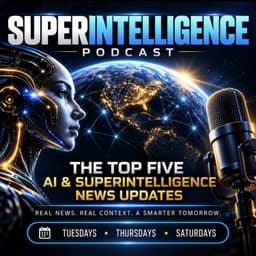
Episode Zero: A Super Intelligence Force, an OpenAI Safety Exit, and a Robotaxi Reality Check
<p>Hey! I'd love to hear your thoughts, send me a voice note.</p><p>A preview of the Superintelligence Podcast and its Top Five format. In this episode:</p><p></p>The White House launches a Super Intelligence Force led by Director of National Intelligence Jay Clayton.A longtime OpenAI safety lead resigns and says the company's culture is broken.Germany's Aleph Alpha releases Kolibri, an open weight English and German model.Japan's Rapidus lines up seventeen chip design partners ahead of its two nanometer push.Tesla's Cybercab, one month into Austin, faces the hard part: scaling up.<p>...
Bond Yields to 10%
<p>1. Strategic Actions and Decisions</p><p>* Divest from fixed income assets and prepare for elevated yields: Reallocate capital out of bonds as structural factors—such as heavy government issuance and persistent inflation—drive 10-year Treasury yields toward 10% by 2032. </p><p>* Monitor critical Treasury yield thresholds for potential equity market stress: Track the 2-year Treasury yield, as a monthly close above 5.30% signals a rapid move toward 6%–7%, which equity markets cannot absorb. </p><p>* Capitalize on capital flows into non-U.S. treasury assets: Adjust institutional allocation strategies to account for foreign marginal buyers preferring U.S. megacap tech equities over U.S. Tre...

Jake Gyllenhaal and Dan Gilroy: Why "Nightcrawler" Is Scary (Nov. 5, 2014)
<p>Jake Gyllenhaal and director Dan Gilroy talk to Charlie Rose about their new film, "Nightcrawler," and why it makes us all complicit in the disturbing media trend it depicts.<br><br>Uploaded 06-11-14<br><br>SUBSCRIBE to get the latest from Charlie Rose: http://bit.ly/CharlieRoseSUBSCRIBE<br><br>Connect with Charlie Rose Online:<br><br>Visit the Charlie Rose WEBSITE: http://bit.ly/CharlieRoseDotCom<br>Like Charlie Rose on FACEBOOK: http://bit.ly/CharlieRoseFacebook<br>Follow Charlie Rose on TWITTER: http://bit.ly/CharlieRoseTwitter<br>Follow Charlie Rose on INSTAGRAM: http://bit.ly/CharlieRoseInstagram<br><br>About...
