
Behavioral Grooves Podcast
Stories, science and secrets from the world’s brightest thought-leaders. Behavioral Grooves is the podcast that satisfies your curiosity of why we do what we do. Explanations of human behavior that will improve your relationships, your wellbeing, and your organization by helping you find your groove.

10
Primal Dating: What Modern Romance Gets Wrong | Tim Ash
<p>Dating in 2026 feels broken. The apps promise infinite choice, rom-coms on our screens promise “the one”, and yet frustration, ghosting, and mismatched expectations seem to be more normal than anything actually working out. This week, Tim Ash, author of Primal Dating, joins us as we explore why dating in the modern world feels so unstable and why many of today’s relationship struggles aren’t personal failures, but predictable outcomes of our ancient instincts clashing with modern environments and expectations.</p> Topics <p>[0:00] Introduction and Speed Round with Tim Ash</p> <p>[7:52] Behavioral tendencies and evolutionary psychology</p> <p>[18:09] The role...

Throwback Thursday: The Myth of the "Relationship Spark" | Logan Ury
<p>Love is in the air this Valentine's Day...or is that science? Today, we're throwing it back to 2021, when we had the privilege of chatting with Logan Ury, Director of Relationship Science at Hinge, about the challenges people face in modern dating. From getting ready for a first date to maintaining a relationship long term, Logan gives us valuable insights and advice on how to overcome common hurdles and make the most out of each stage or the dating life. </p> <p>So, the question of the day is - are you a maximizer, satisficer, or romanticizer? Tune in t...

What Dating Apps Miss About Attraction | Paul Eastwick
<p>You think you know what you want in a partner, but behavioral science says attraction doesn’t work that way. Relationship scientist Paul Eastwick breaks down why dating apps and checklists fail, how attraction actually forms, and why real compatibility grows through interaction, timing, and shared history.</p> Topics <p>[0:00] Introduction and Speed Round with Paul Eastwick</p> <p>[8:21] Why dating checklists and apps fail us</p> <p>[14:45] The myth of universal attractiveness</p> <p>[21:03] How attraction develops over time</p> <p>[27:29] Is “love at first sight” a lie?</p> <p>[38:13] The ‘best’ way to meet people</p> <p>[47:04] The Stroop...

How Small Phrases Make Big Impacts | James Geary
<p>Why do certain phrases stay with us for life? In this episode, were joined by James Geary, author of The World in a Phrase, to explore how aphorisms shape judgment, decision-making, and meaning. From fortune cookies to philosophy, they unpack why short sayings act as cognitive heuristics, how they guide thinking without giving answers, and why the aphorisms that serve us best often change over time, just as we do.</p> Topics <p>[0:00] Introduction and Speed Round with James Geary</p> <p>[7:30] The Laws of Aphorisms</p> <p>[13:45] Finding Wisdom in Unexpected Places</p> <p>[21:07] Aphorisms as Cognitive Heuristics<...
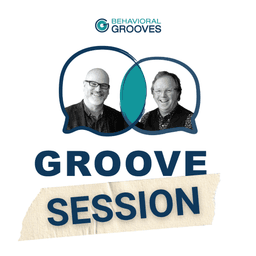
Finding Common Ground
<p>This Grooving Session feels personal for us. We’re combining our own experiences with behavioral science to explore why civil discourse seems so fragile right now. Over the weekend, tensions rose as ICE activity increased in Minneapolis, and Kurt’s neighborhood was deeply affected. When political tension is high, factors such as fear, proximity to events, and social identity can worsen polarization. It’s easy to forget that we have more in common than we think.</p> <p>We’re here to support you, and we hope this episode gives you practical ways to engage. By slowing down, avoiding online d...

Why Rational People Make Irrational Choices | Alex Imas
<p>Why do smart people keep making predictably bad decisions? Behavioral economist Alex Imas joins us to unpack The Winner’s Curse, loss aversion, and the persistent biases that shape markets, policy, and everyday choices. We explore why classic economic models fall short and what behavioral economics reveals about how humans really decide.</p> Topics <p>[0:00] Introduction and speed round with Alex Imas</p> <p>[11:55] The Winner’s Curse and its implications</p> <p>[21:13] Behavioral economics and standard economic matters</p> <p>[28:01] Loss aversion and decision-making</p> <p>[35:04] Behavioral economics in policy and law</p> <p>[41:00] Tom Sawyer economics</p> <p>[4...
January Blues? How to Rest, Reflect, and Restart
<p>January often feels like a letdown instead of a fresh start. In this episode, we explain the behavioral science behind the January slump, why motivation drops after the holidays, and how reflection, recovery, and smaller milestones can help individuals and teams regain energy and momentum.</p> Topics <p>[0:00] Are you feeling that January Slump?</p> <p>[3:34] Reflecting and recharging</p> <p>[4:56] What leaders can do</p> <p>[8:00] Milestones for motivation</p> <p>[11:42] Final thoughts and next steps</p> <p>©2026 Behavioral Grooves</p> Links <p>Join us on Substack!</p> <p>Join the Behavioral Grooves community</p> <p>Subscribe to B...

Why We Get Bored | Erin Westgate
<p>Boredom feels unpleasant, but that may be the point. Psychologist Dr. Erin Westgate joins us to explain why boredom is a signal rather than a flaw, how meaning and attention shape it, and what it can teach us about work, burnout, and living a psychologically rich life.</p> Topics <p>[0:00] Intro and Speed Round with Erin Westgate</p> <p>[8:05] Do we think for pleasure?</p> <p>[13:11] Why men would rather shock themselves than be bored</p> <p>[15:50] The MAC model</p> <p>[25:23] Is boredom useful?</p> <p>[29:07] Enjoyable vs. interesting experiences</p> <p>[31:51] Can a boring life still be...
Throwback Thursday: The Surprising Power of One Word | Jonah Berger
<p>It’s Throwback Thursday at Behavioral Grooves, and we’re revisiting one of our favorite conversations with bestselling author Jonah Berger on the surprising power of words. Tiny shifts in language can shape behavior, influence relationships, and even change how others see us. Jonah reveals the “magic words” that captivate, motivate, and persuade, and shares practical tips for turning actions into identities, priming behavior with language, and making every word count.</p> Topics <p>[3:27] Welcome and speed round questions.</p> <p>[5:09] Why asking for advice makes us actually seem smarter.</p> <p>[7:17] Using abstract vs. concrete language.</p> <p>[12:42] How Jona...

The Productivity Myth That’s Burning You Out | Natalie Nixon, PhD
<p>What if the key to better work isn’t doing more, but moving more, resting better, and thinking differently? Dr. Natalie Nixon joins us to unpack her Move, Think, Rest framework and explain why creativity thrives when we step away from hustle culture. From walking meetings and daydreaming to embracing ambiguity and redesigning how we work, this episode offers a powerful reframe for anyone feeling burned out or stuck.</p> Topics <p>[0:00] Introduction and speed round with Natalie Nixon</p> <p>[10:20] Burnout, hustle culture, and redesigning how we work</p> <p>[16:12 Productivity myths from the Industrial Revolution</p> <p>[20:34] Mo...
