

The 9Innings Podcast
Kevin Thompson RICP®, CFP® is the founder of 9i Capital Group LLC is the registered investment advisor of 9Innings Capital Group LLc a marketing and consulting firm. On his podcast, he delves into deep financial topics and provides great insight on how markets and economics impact your money.Disclosure: https://sites.google.com/view/9idisclosure/disclosure

10

🎙️💰 You Saved Enough to Retire. So Why Can't You?
<p>A business owner may be financially ready to retire, but what happens when their spouse is a decade younger and still needs health insurance?</p><p>In this episode, I'm joined by Andy Panko of Tenon Financial to discuss the costly and often complicated road to Medicare. We explore how employer-sponsored health insurance can mask the true cost of coverage, the challenges of retiring before 65, and the decisions retirees face when choosing between Medicare Advantage and traditional Medicare.</p><p>We also dive into Social Security's earnings test, the uncertainty surrounding Roth conversion projections, and one of the biggest...

Econ 101: 📊 The Economic Numbers Just Dropped, What Is the Jobs Data Telling Us?
<p>In this episode of the 9innings Podcast: GDP is growing, yet September added just 29,000 jobs, and households are spending more even as real disposable income stays roughly flat.</p><p> In this Econ 101 episode, Kevin looks beneath the headline numbers to trace how lower savings and rising consumer credit may be helping sustain spending, and why that could become a strain if incomes don’t catch up. He also considers the brighter explanation: businesses may be producing more with the same workforce as technology boosts productivity. </p><p>The takeaway isn’t a recession call, but a closer look at t...
FoF: 🔥 Behind the Headlines: What the Financial News Isn’t Telling You.
<p>In this episode of Facts of Our Feelings, Kevin Thompson expands on five topics he was recently quoted on in major publications. He explores why loosening credit standards won't solve housing affordability, how declining insurer competition is reshaping Medicare Advantage plans, and why Social Security COLA increases aren't necessarily good news given rising retiree costs. He also explains how ultra-wealthy families use private placement life insurance for tax-efficient investing, and why financial advisors need solid succession plans to protect clients. His key takeaway: always look beyond the headlines for the real story.</p><p></p><p>Housing Affordability Challenges (00:01:10)<...
Econ 101: 🔥 The Fed Is Hitting the Brakes...Here’s What It Means for You
<p>In this episode of Econ 101, I break down the Federal Reserve’s latest 25-basis-point rate hike, bringing the federal funds target range to 3.75%–4.00%, and what higher interest rates actually mean for you.</p><p>From credit cards and car loans to mortgages and business investment, higher rates are designed to slow spending and cool the economy. But there’s another side to the story: massive investment in AI and technology continues to help drive economic growth.</p><p>What happens if the Fed keeps hitting the brakes while the sector helping keep the economy moving starts to slow?</p><p>Let’...
FoF: 🔥 Why Dying With Too Much Money Might Be Your Biggest Retirement Problem
<p>In this episode of Facts Over Feelings, I tackle an overlooked retirement challenge: dying with too much money.</p><p>After spending 30 or 40 years saving and investing, flipping the switch from saver to spender can be harder than it sounds. I explore the psychology behind that transition and ask a simple question: What was all that money actually for?</p><p>Whether your goal is enjoying retirement, maintaining financial security, leaving a legacy, or some combination of all three, defining that purpose matters. I discuss why retirees should quantify their inheritance goals, give themselves permission to spend, and consider...
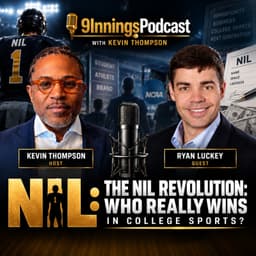
🔥NIL and the Transfer Portal: Redefining Loyalty and Opportunity in College Athletics w/Ryan Luckey
<p>In this episode, host Kevin Thompson sits down with Ryan Luckey, an adjunct professor at TCU specializing in NIL (Name, Image, and Likeness) in college sports. They discuss how NIL has transformed college athletics, giving athletes the ability to profit from their personal brands while also opening the door to direct compensation from schools.</p><p>The conversation explores the growing financial divide between large and small programs, the disruptive impact of the transfer portal, the potential role of government regulation, and the evolving definition of the “student-athlete.”</p><p>Ryan offers a cautiously optimistic view of NIL’s future...
Econ 101: 🔥 No Free Lunch: The Economics of the Subscription Economy
<p>In this episode of the 9Innings Podcast’s Econ 101 segment, the host explores the subscription economy and why businesses and investors increasingly favor recurring revenue over one-time purchases.</p><p>The episode examines the shift from ownership to access across software, music, entertainment, apps, and other services and why predictable recurring revenue has become such an attractive business model.</p><p>But what’s good for businesses can become costly for consumers. The host breaks down “subscription creep,” challenges the idea that many services are truly “free,” and explains how companies ultimately find ways to monetize our participation.</p><p>Listeners...
Econ 101: 🔥 The Payment Economy: When Everything Becomes a Monthly Bill
<p>In this Econ 101 segment on the 9innings Podcast, we explore America’s growing “payment economy,” where consumers increasingly focus on the monthly payment rather than the total price.</p><p>From longer-term financing and Buy Now, Pay Later services to the ever-growing subscription economy, we examine how breaking purchases into smaller payments can create the illusion of affordability without actually reducing the cost.</p><p>We also look at how credit-driven consumption can mask vulnerabilities in the economy, keep demand, and potentially prices elevated, while putting additional pressure on household finances.</p><p>The takeaway is simple: Stop asking whethe...
FoF: 🔥 Tax Titans: Decoding CPAs, EAs, and PTIN Preparers Like a Pro
<p>Welcome to the 9Innings Podcast where we Educate, Empower and Engage. </p><p> In this episode of Facts of Our Feelings, tKevin breaks down key differences between tax professionals-CPAs, Enrolled Agents (EAs), and PTIN holders. </p><p> We clarify that not all CPAs specialize in taxes, while EAs are federally authorized specifically for taxation and IRS representation. PTIN holders can prepare returns but lack equivalent credentials or representation rights. </p><p> The episode also distinguishes tax preparation (backward-looking) from tax planning (forward-looking), emphasizing that many preparers don't offer proactive planning. Listeners are encouraged to ask the right questions when...

Econ 101: 🔥 Trapped in the Gen X Sandwich: Kids, Aging Parents & Your Own Future
<p>In this episode of Econ 101, we explore the “Gen X Sandwich”—the financial and emotional squeeze many Gen Xers face while simultaneously supporting their children and caring for aging parents.</p><p>Drawing from personal experience, we discuss why simply having a trust or power of attorney may not be enough. We cover the importance of understanding your parents’ financial accounts, establishing the proper authority and access, organizing passwords and digital assets, and having difficult conversations about healthcare, funeral arrangements, and end-of-life wishes before a crisis occurs.</p><p>The biggest takeaway: don’t wait until something happens to start plan...
