
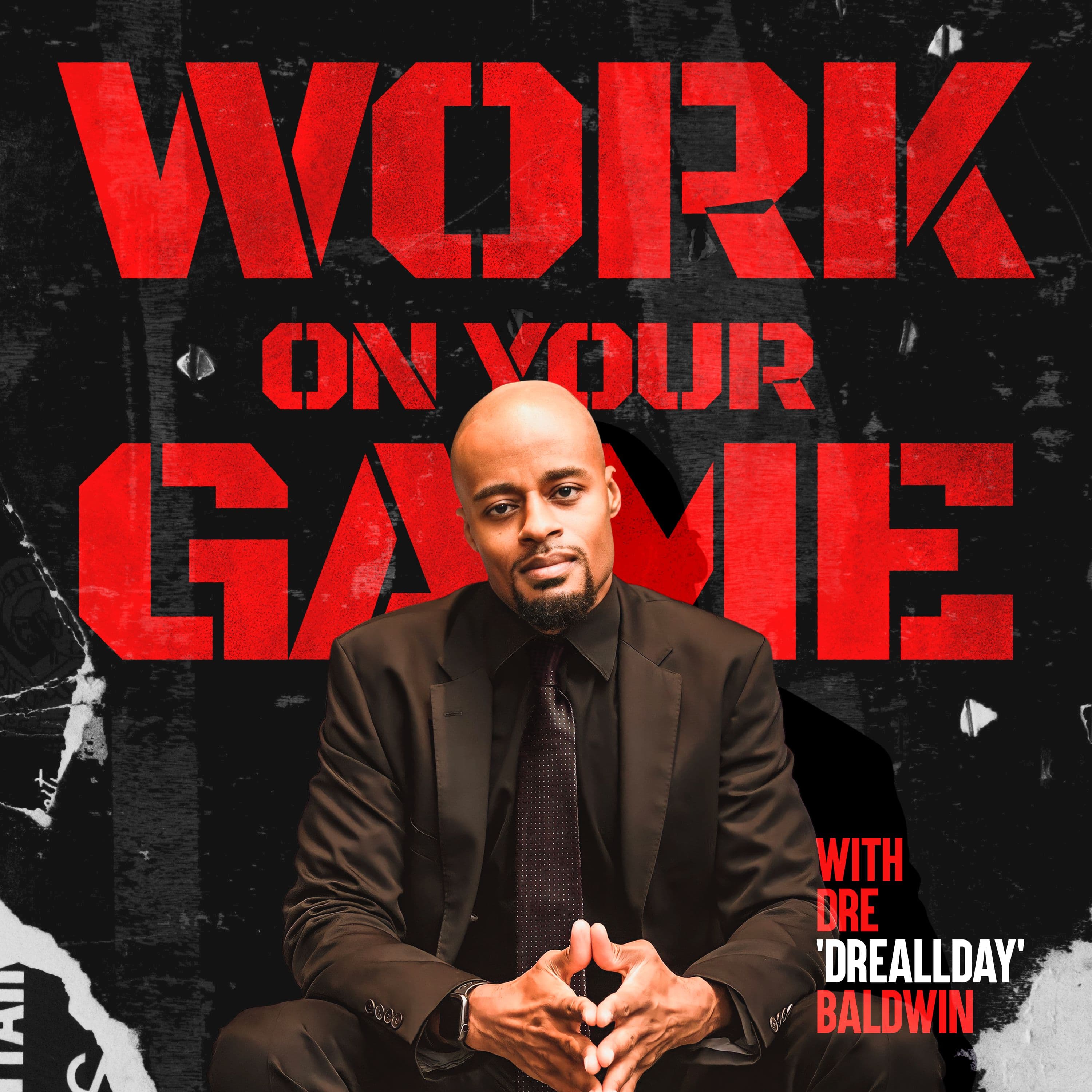
Work On Your Game: Discipline, Structure, and Execution Under Pressure
No Motivation. Just Standards. “Dre is the best at being real, direct, and strategic as a coach.” — Work On Your Game University Member Work On Your Game is the daily MasterClass for high performers who refuse to rely on motivation, talent, or guesswork to win. This is not inspiration. It’s execution architecture. Each episode sharpens how you think, decide, and act — so your results stop depending on mood, luck, or external validation. The work is built on four non-negotiables: • Discipline — doing the same things, the same way, every day • Confidence — earned through preparation and proof • Mental Toughness — sustained execution under pressure • Pers...

10
#3810_ How to Align Perception With Reality
You can have the skills, the experience, and the ability to deliver results, but still get overlooked because people don't see what you're capable of. The world can only respond to what it perceives. If the way you present yourself doesn't communicate your real value, people may underestimate you, overlook you for opportunities, or fail to recognize what you bring to the table. In this masterclass, I break down how Power Presence makes your ability visible, why people make decisions about you before they have experienced your performance, and why being authentic doesn't mean passively expecting people to recognize your...

#3809: Your Reputation is Built In Patterns, Not Moments
Your reputation isn't determined by one great performance or one embarrassing mistake. It's built through what you do consistently, day after day. People may notice a highlight, but what they learn to expect from you comes from your repeated behavior. If you want people to see you differently, you need to understand the patterns that are shaping their perception of you right now. In this masterclass, I break down why consistency matters more than highlights, how your repeated behavior reveals your character, and why every interaction either reinforces or changes the story people have about you. I'll also explain why...
#3808: Why You're Not Getting Promoted At Work
You might be the best performer on your team and still get passed over for a promotion. You assume your results should speak for themselves, but promotions aren't simply rewards for what you've already accomplished. They're bets on what someone believes you can do next. Before decision-makers see your performance at the next level, they're already forming an impression of whether you look and feel capable of handling it. In this masterclass, I break down why people promote potential, not just performance, why success at one level doesn't guarantee success at the next, and how your presence creates confidence in...
#3807: The Most Important Things Can't Be Measured
We live in a world obsessed with numbers: revenue, followers, rankings, scores, and other metrics that tell us where we stand. Those numbers matter, but they don't tell the whole story. Discipline, judgment, resilience, leadership, trust, and reputation can have an enormous impact on your results without fitting neatly into a spreadsheet. If you focus only on what you can measure, you risk overlooking what actually drives your success. In this masterclass, I break down why intangible qualities produce tangible outcomes, why your most valuable assets often can't be reduced to numbers, and why you should never confuse something being...
#3806: Why The Best Person NEVER Wins
Being the most talented person in the room doesn't guarantee you'll be the one who wins. Skill matters, but results are influenced by timing, relationships, market conditions, and your ability to understand the game you're actually playing. You can be better at the work itself and still lose to someone who knows how to turn their abilities into results. In this masterclass, I break down why success requires more than skill, why you need to focus on the variables you can actually influence, and why persistence gives your talent more chances to meet opportunity. I use examples from basketball, my...
#3805: Why Bad Luck Is The Best Thing That Happens To You
What if the setbacks you're trying to avoid are the very things that could make you stronger? Most people see bad luck as something that gets in the way of success. But unexpected problems can force you to act, expose weaknesses you didn't know you had, and push you to make changes you might have delayed indefinitely. In this masterclass, I break down why bad luck forces your hand, how problems reveal strengths and weaknesses, and why every setback you overcome can build confidence in your own ability to handle what comes next. I share lessons from my basketball career...
#3804: Strong Leaders Know When To Bend
Some people think strength means never backing down, never compromising, and never changing their position. But refusing to adjust isn't always a sign of strength. Sometimes it's the very thing that causes you to break. The challenge is knowing which principles you must protect and which methods you need to change. In this masterclass, I break down why rigidity creates fragility, how adaptability preserves strength, and why resilience beats resistance. Using examples from business, technology, sports, and leadership, I explain why the strongest people adjust their approach when circumstances change without abandoning the mission they're working toward. The goal isn't...
#3803: Measure Results, Not Effort
You can work hard all day, sacrifice your time, and stay busy for months without producing the result you want. And when you fall short, it's tempting to point to everything you did and expect that effort to count for something. But effort and results are two different things. The work you put in matters because of what it produces, not simply because you put it in. In this masterclass, I break down why effort is an input and results are the output, how effort can become an excuse for poor outcomes, and why you need to measure the numbers...
#3802: The Friction You Don't Know You're Fighting
You say you want to get things done, build better habits, and make progress. But when you struggle to execute, you immediately blame yourself. You tell yourself you're lazy, undisciplined, or unmotivated. What if the real problem isn't your discipline? What if you've designed your life in a way that makes the things you want to do harder than they need to be? In this masterclass, I break down the hidden friction that slows down your progress, why high performers build systems that make execution easier, and how to add friction to bad habits while removing it from good ones...
#3801: How to Think 3 Moves Ahead
Most people make decisions based on what's right in front of them. They see an opportunity, take the immediate win, and move on. But a decision that looks smart today can create expensive consequences tomorrow. The real question isn't just whether your next move is good. It's where that move puts you three moves from now. In this masterclass, I break down why you shouldn't judge a decision by its first outcome, why the most obvious move isn't always the best one, and how to think through the entire sequence before you act. If you want to make better decisions...
