
Built to Sell Radio
Built to Sell Radio is a weekly podcast for business owners interested in selling a business. Each week, we ask an entrepreneur who has recently sold a business why they decided to sell their business, what they did right and what mistakes they made through the process of exiting their business. Built to Sell Radio is the ultimate insider's guide to approaching the most important financial transaction of your life.

10
Ep 524 3 Non-Negotiables to Walk Away Clean, Turn Your Expertise into Recurring Revenue, and Avoiding a Deal-Killing Clause.
<p >Most experts who start a practice or studio end up trapped by their own success. The schedule is packed, the waitlist is long, but every dollar still depends on them showing up. </p> <p >In this week's episode of Built to Sell Radio, John talks to a physical therapist who turned a fully booked, owner-dependent practice into a boutique fitness business with recurring revenue, a second-in-command, and a clean exit on her terms. After a first deal collapsed on closing day thanks to a last-minute bank clause, she went back to market with three non-negotiables and still got a s...

Ep 523 15 x EBITDA for a Service Firm
<p>In this episode of Built to Sell Radio, John Warrillow sits down with Ujwal Arkalgud, who built the same company twice. Chapter one was a classic problem: a profitable, founder-heavy services firm with impressive EBITDA but a ceiling on valuation. Chapter two began when he turned that service into a productized offering, transformed how customers bought his work, and ultimately sold for more than 15x EBITDA — roughly three times the offer he received as a simple service provider. </p>
Ep 522 The difference between 4x vs.8x EBITDA, Customer Concentration Discounts, PE Re-trades with Eric Wiklendt on this special edition of Inside the Mind of an Acquirer
<p >For many owners, private equity feels like a black box: a buyer shows up with a multiple, some debt, and a term sheet, and it is hard to tell whether you are getting a fair shake or being set up for a painful re-trade later. </p> <p >In this Inside the Mind of an Acquirer episode of Built to Sell Radio, John Warrillow sits down with Speyside Equity managing director Eric Wiklendt.</p>
Ep 521 10x Outcome Selling Tiny to Private Equity and how to make the 'Cruise vs Double Down' Decision
<p>Andrew Roberts spent two decades turning a bootstrapped family company from Brisbane into one of the most widely used text editors on the web, then faced the hardest call of his career: keep a comfortable, profitable business or push for a bigger exit with venture capital and private equity in the mix. </p>
Ep 520 How Chris Hutchins convinced Google to buy Milk—and Wealthfront to acquire Grove—despite not generating much revenue (and no EBITDA)
<p >A strategic acquirer is a company buying to advance its own roadmap, distribution, or capabilities—unlike financial buyers (private equity, family offices) who buy primarily for cash flow. To a strategic, value may sit in what you've built, not what you've earned. </p> <p >Chris Hutchins' story makes the point. He co-founded Milk, acquired by Google, and later founded Grove, acquired by Wealthfront. Both saw assets they could plug in—product, team, IP—even when revenue and EBITDA weren't impressive. </p> <p >If you want a strategic acquirer to pay for what you've built rather than how much money you make...
Ep 519 How to Avoid the Unforced Errors That Can Wipe Out Your Equity
<p >Spencer Dennis was an elite golfer whose playing career ended with spine surgery in his teens. He became a tour-level coach, running high-performance programs for juniors, college players, and pros. Managing parents, trainers, and recruiters through texts and email was chaos, so he built CoachNow to guide athletes between sessions. </p> <p >CoachNow caught on quickly with busy coaches. Then a run of decisions—turning off revenue under "grow fast" advice, stacking convertibles and preferences, and accepting stock-for-stock deals—left Spencer with little to show for a product customers loved. This is a cautionary tale for any owner negotiating with...
Ep 518 Growth Equity, Control, and When Rolling Equity Fails — John Ruffolo (Inside the Mind of an Acquirer)
<p >If you're considering your endgame, you're probably looking at private equity. Most PE firms use a familiar formula: buy a majority stake and ask the owner to "roll equity"—re-invest part of the proceeds—into the newco they're building. The downside: you become a minority shareholder in a business you no longer control. </p> <p >There's another path: growth equity, which lets you take chips off the table via a secondary while maintaining control. That's the business John Ruffolo is in as Founder & Managing Partner at Maverix Private Equity (he also founded OMERS Ventures).</p>
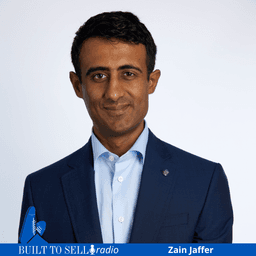
Ep 517 The Surprising Truth of a 9-Figure Exit — and How Not to Lose $23 Million (After the Deal)
<p >If you've ever noticed those ads inside a mobile game, you have Zain Jaffer to thank. He co-founded Vungle and helped popularize rewarded video ads—the ones that revive your character or hand you in-app currency after you watch. </p> <p >In this Built to Sell Radio episode, Zain explains how he rode the smartphone wave to a $780M all-cash exit to Blackstone—and why he personally took home more than $100M. Then he gets candid about what came next. </p>
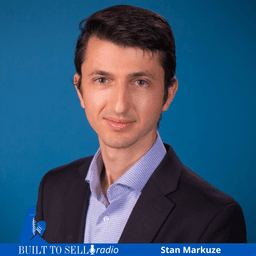
Ep 516 How Joyride Fetched 7x Revenue for a Business Selling Abandoned Cars (Exit Story)
<p >Most cities have a problem: what to do with cars that get towed and never picked up. They pile up in impound lots—taking up space and tying up cash. Stan Markuze helped solve that problem by co-founding Joyride Auto, an online auction platform where repair shops, scrap dealers, and car enthusiasts can buy those abandoned vehicles directly from the lot. </p> <p >In this episode, Stan shares how he and his co-founders built a cash-flow-positive business that turned a clunky, paper-based process into a digital marketplace—and sold it to a private-equity firm for seven times revenue in just...
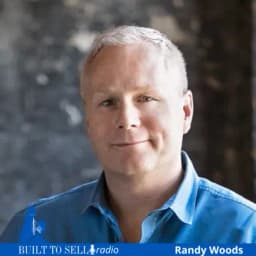
Ep 515 Inside the Mind of an Acquirer with Valtech's Randy Woods
<p>After a 23-year journey building Non-Linear Creations into a marketing giant with more than 120 employees, Randy Woods sold it in 2017 to Valtech. Valtech is a distinguished digital agency offering marketing, digital technology, and business transformation consulting services.</p> <p>Post-sale, Woods now serves as the SVP of Strategic Growth Opportunity at Valtech, a role dedicated to identifying potential acquisitions for the business. In the latest installment of Built to Sell Radio's Inside the Mind of an Acquirer series, we sit down with Woods to discuss how to:</p> Make your company irresistible to an acquirer. Leverage a "put option" to...
