
My Worst Investment Ever Podcast
Welcome to My Worst Investment Ever podcast hosted by Your Worst Podcast Host, Andrew Stotz, where you will hear stories of loss to keep you winning. In our community, we know that to win in investing you must take the risk, but to win big, you’ve got to reduce it. Your Worst Podcast Host, Andrew Stotz, Ph.D., CFA, is also the CEO of A. Stotz Investment Research and A. Stotz Academy, which helps people create, grow, measure, and protect their wealth. To find more stories like this, previous episodes, and resources to help you reduce your risk, visit https...

10
Pierre Rogers - Lessons on Trust, Ownership, and Rebuilding From Zero
<p>BIO: Pierre Rogers is a founder and author based in Irvine, California. After his first company collapsed, resulting in federal prison and $1.6M in personal debt, he rebuilt from less than zero—launching a new company.</p><p>STORY: Pierre hired his best friend as CFO, ignored repeated warnings from his own team, and watched that one decision spiral into a PPP fraud scandal, a federal indictment, and 18 months behind bars.</p><p>LEARNING: What you tolerate in the people you lead says more about your judgment than anything you say or do yourself.</p><p></p>"What you to...

Tony Martignetti - The One-Week Fundraising Plan Small Nonprofits Are Missing
<p>BIO: Tony Martignetti is the author of the upcoming book, Planned Giving Accelerated. He's been helping small- and mid-size US nonprofits launch Planned Giving fundraising programs since 1997. Tony is a lawyer, but he doesn't write or talk like one. He weaves in his background in stand-up comedy and improv to make Planned Giving easy, accessible, and affordable.</p><p>STORY: Tony returns with a different kind of investment story: how he spent eight months writing Planned Giving Accelerated, a book designed to help small and mid-sized nonprofits launch a legacy giving program in as little as one week.</p><...
Dustin Heiner - Reselling Your Sawdust: The Passive Income Strategy Hiding in Your Business
<p>BIO: Dustin Heiner is a real estate investor who quit his job at 37 with financial freedom and passive income from his real estate investing. Through his coaching, podcast, and YouTube channel, he has helped thousands of people invest in real estate.</p><p>STORY: In late 2019, Dustin was one signature away from leasing a gym that had nothing to do with real estate, then COVID-19 shut every gym in America and closed the deal for him instead. That near miss led him to a strategy that now runs quietly underneath everything he does: reselling his sawdust.</p><p>LEARNING...
#Business DNA: Interview with Chane Laosonthorn
<p>Founder values must be translated into systems: His grandfather's attention to every patient had to become a measurable standard the rest of the hospital could follow. </p><p>What clinics can't afford, Wattanapat built: Small clinics can't afford the specialists or the equipment for serious cases. Wattanapat built that capability instead, adding specialists like neurosurgeons and cardiologists. </p><p>Local healthcare providers can be partners rather than competitors: Community clinics handle the basic cases and send Wattanapat the ones that need emergency, inpatient, or specialist care. It's not competition; help flows both ways. </p><p>Growth requires selective investment...
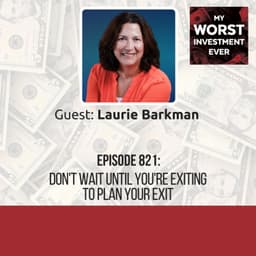
Laurie Barkman - Don't Wait Until You're Exiting to Plan Your Exit
<p>BIO: Laurie Barkman is a Certified Exit Planner, M&A Advisor, and founder of The Business Transition Sherpa®.</p><p>STORY: Laurie explains why it's important to start planning your exit plan five to seven years before and what you need to do during that period.</p><p>LEARNING: Don't wait until you're exiting to plan your exit.</p><p> </p>"Don't wait to do exit planning when you're exiting, it will be too late. Start five to seven years out. This gives you time to make an impact for change, make the business more attractive and ready, and t...
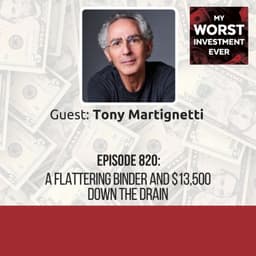
Tony Martignetti – A Flattering Binder and $13,500 Down the Drain
<p>BIO: Tony Martignetti is the evangelist for Planned Giving fundraising for small- and mid-size nonprofits.</p><p>STORY: Two years into building his business, Tony convinced himself he could become the nation's thought leader on planned giving fundraising — not just for nonprofits, but for all Americans. He walked into a swanky Midtown Manhattan PR agency, got dazzled by a four-inch binder, and signed up at $6,750 per month. Two months and $13,500 later, his only return was a single bylined op-ed in a free subway newspaper.</p><p>LEARNING: Check your ego. Vet your big ideas with honest, trusted people before sp...
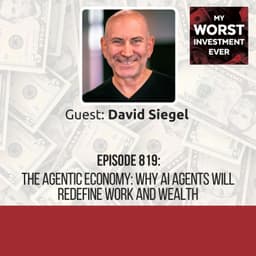
David Siegel – The Agentic Economy: Why AI Agents Will Redefine Work and Wealth
<p>BIO: David Siegel is a Silicon Valley entrepreneur who has founded more than a dozen companies. He has written five books on technology and business, was once a candidate for the dean of Stanford Business School, and is now an AI thought leader leading an AI startup he hopes will pave the way for the agentic economy.</p><p>STORY: Nine months after David's last appearance on the podcast, the conversation has shifted from "what are LLMs?" to agents that act. 60-65% of NYSE trades are already fully machine-to-machine—a preview of where all commerce is headed.</p><p>LE...
Athena Brownson – What Happens When Trust Replaces Due Diligence
<p>BIO: Athena Brownson is a Denver realtor, investor, developer, and former professional skier whose resilience through chronic illness fuels her refined, strategic, and client-focused approach to real estate.</p><p>STORY: Athena lost $130,000 in her first development project when a builder she considered a friend vanished with the upfront funds. Her trust and incomplete due diligence led to a total loss, teaching her that personal relationships can create dangerous blind spots in business.</p><p>LEARNING: Due diligence is non-negotiable. Trust is a liability.</p><p> </p>“A simple conversation with someone that we know, like, and trust is in...
Jon Ostenson – Top 10 Franchise Opportunities for 2026
<p>BIO: Jon is the Founder and CEO of FranBridge Consulting, a 2-time Inc. 5000 company, and a leading franchise consultant.</p><p>STORY: Jon believes franchising remains one of the most effective ways to build durable income, especially when investors focus on operational discipline and unit economics. He shares his top franchise categories for 2026.</p><p>LEARNING: Look for businesses with repeat customers, operational discipline, proven unit economics, and leadership teams that have already made their mistakes.</p><h2>Guest profile</h2><p>Jon Ostenson is the Founder and CEO of FranBridge Consulting, a 2-time Inc. 5000 company, and he is...
David Siegel – A Smart Idea Nobody Wanted
<p>BIO: David Siegel is a Silicon Valley entrepreneur who has founded more than a dozen companies. He has written five books on technology and business, was once a candidate for the dean of Stanford Business School, and is now an AI thought leader leading an AI startup he hopes will pave the way for the agentic economy.</p><p>STORY: David invested heavily in launching a longevity coaching business, believing people would pay to extend their lives through lifestyle change. Despite strong science, personal results, and significant marketing spend, demand proved nearly nonexistent.</p><p>LEARNING: A great idea...
