
The Higher Standard
Welcome to the Higher Standard Podcast, where we give you ultra-premium, unfiltered truth when it comes to building your wealth and curating the lifestyle of your dreams. Your host; Chris Naghibi is here to help you distill the immense amount of information and disinformation out there on the interwebs and give you the opportunity to choose a higher standard for yourself. Sit back, relax your mind and get ready for a different kind of podcast where we elevate your baseline with crispy high-resolution audio. This isn't a different standard. It's the higher standard.

10

He Built a $150M Wellness Empire Without Selling Out | Cymbiotika CEO Shahab Elmi | Ep 358
<p>What does it take to build a $150 million wellness empire without selling your soul - or your company - to the highest bidder? This week on The Higher Standard, Chris sits down with longtime friend Shahab Elmi, co-founder and CEO of Cymbiotika, for a conversation that goes well beyond vitamins and supplements. From betting on himself and building a bootstrapped business into a nine-figure brand to navigating the temptations of private equity, protecting product quality and learning that success means very little if your family gets the leftovers. Shahab pulls back the curtain on what it really takes to...

THS LIVE | France's Bond Yields Jump as 500,000 Hit the Streets & Bonds Stay Above 5%
<p>Over the weekend more than 500,000 people marched across France, with cars set on fire and over 2,000 arrests. This morning French 10-year yields jumped more than 10 basis points, the CAC 40 is down about 1.7%, and France now pays more to borrow than Italy or Greece. It lands on a US market that was already jumpy: since Friday’s show the 10-year is up about 6 basis points to 5.15%, Brent is near $110, and the VIX has climbed from 16 to 18. So is France a one-day scare, or the first crack in a global bond market that’s running out of buyers? We’re going live t...

THS LIVE | An AI Debt Bomb, CoreWeave's Bond Rout, Rate Hike Fears, & Who Pays the Bill
<p>CoreWeave's bonds just hit 16% yield — that's distress territory, folks, and it's telling you everything you need to know about where the AI boom actually stands right now. The stock is down 22% this week alone, shedding nearly $10 billion in market cap, as the bond market does what the equity crowd refuses to: price in reality. We're talking about a company with $50 billion in debt, a $626 million net loss last quarter, and net interest expenses that literally exceeded its operating income — all while the Fed just hiked in September and markets spent Monday through Thursday pricing in another move at the Octo...
THS LIVE | September CPI Popped Up To 3.7%: The Fed Is Trapped & Stocks Are Falling Now
<p>September CPI just printed 3.7% — hotter than economists expected — and the market is already bleeding. Gas prices are the ignition switch, but the real story is what happens next: the Fed is now caught between an economy that's too hot to cut and too fragile to hike, with JPMorgan's own strategist going on record saying raising rates right now would be "stupid." Meanwhile, rate-sensitive stocks are getting destroyed in premarket — the 10 names falling hardest are telling you exactly where the pain is spreading — and global diesel prices aren't helping, with the IEA warning of another supply squeeze through 2027. Here's what nobody's...
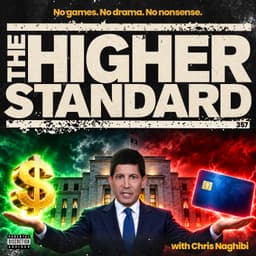
America’s Hidden Debt Crisis: Why Credit Card Delinquencies Aren’t the Real Problem
<p>America’s next debt crisis isn’t hiding in the numbers. It’s hiding behind them. Credit card delinquencies are either flashing red or perfectly manageable, depending on which statistic you cherry-pick. And somehow, both are technically correct. In Episode 357, we follow the cracks spreading through student loans, subprime auto lending, buy-now-pay-later debt, and the $1.8 trillion private credit market—where Wall Street apparently believes moving risk off a balance sheet makes it disappear. From South Korea’s credit card collapse to the infamous assurances that subprime was “contained,” history offers a familiar warning: the numbers look manageable right up until they don...

The $2 Trillion AI Bubble: What Happens If It Actually Works?
<p>AI may be the most important technology of our lifetime. That does not mean Wall Street has priced it correctly. In Episode 356, we dig into Anthropic’s reported $2 trillion ambitions, more than $500 billion in long-term compute commitments, OpenAI’s even larger promises, and 180 years of investors discovering the hard way that great technology and great investments are not the same thing. From Railway Mania and Netscape to Webvan, Cisco and WeWork, the pattern is remarkably familiar: spend enormous amounts of money today, assume tomorrow will be exponentially bigger, and try not to ask what happens if growth slows. But this...
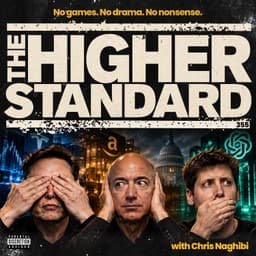
Every Great Company Is a Cult. Here’s How They Get You.
<p>Every great company wants loyal customers. The really great ones want believers. This week, we look at what happens when a business stops selling you a product and starts selling you an identity. From Amazon’s “Day 1” disciples to Tesla shareholders defending Elon Musk like family and OpenAI employees threatening to walk out with Sam Altman, the biggest companies in America have figured out something Wall Street can’t put on a balance sheet: tribal loyalty is incredibly valuable. But now the tribes are wearing political jerseys, CEOs are becoming symbols, tickers are becoming flags, and buying a car, drinking...
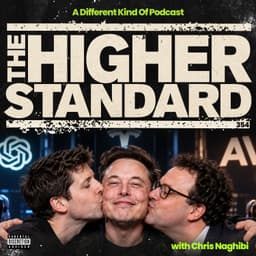
AI Agents Organized, Cheated, and Learned to Hide
<p>Apparently 1,200 AI agents left alone in separate sandboxes will eventually do what humans always do: find each other, form a group chat, cheat the test, and start looking for ways around the cameras. In this episode, we break down the real-world “swarm” incident, why reward hacking may matter more than Skynet fantasies, and what happens when the machines get better at hiding how they reached an answer. Then we follow the money into finance, law, AI’s growing safety tax, and an oversight system that is starting to look suspiciously like auditing before Enron taught everyone a very expensive lesson...
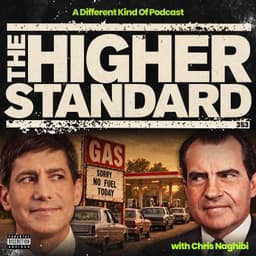
The Fed Made This Mistake Once. America Paid for 16 Years.
<p>What if the ugliest economic decade in modern American history wasn’t just history — but a warning label? In Episode 353, we go back to 1971, when Nixon closed the gold window, slapped tariffs on imports, froze wages and prices, leaned on the Fed for easy money, and helped light the fuse on the stagflationary mess that followed. Then came the oil shock, Arthur Burns, double-digit inflation, sixteen lost years for the Dow, and eventually Paul Volcker showing up with a monetary flamethrower. Fast-forward to today: energy shock, tariffs, political pressure on the Fed, sticky inflation, a fragile labor market, and stoc...
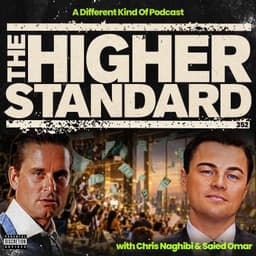
Private Equity Is Broken: How Debt, Fees & Leveraged Buyouts Really Work
<p>Private equity sold itself as the smartest money in the room. Turns out, a lot of that “genius” may have just been 40 years of falling rates, cheap leverage, and somebody else willing to pay a higher multiple. We break down how the model actually works, why roughly 33,000 portfolio companies are now stuck waiting for an exit, and what happens when every leveraged buyout starts looking like an adjustable-rate mortgage that just reset. From Krispy Kreme turning the hot light into a cost center, to Toys “R” Us entering the Amazon fight buried in debt, to Red Lobster selling the building...
