
Marketplace Morning Report
In less than 10 minutes, we'll get you up to speed on all the news you missed overnight. Throughout the morning, the "Marketplace Morning Report" team will bring you the latest business and economic stories you need to know to start your day.

10
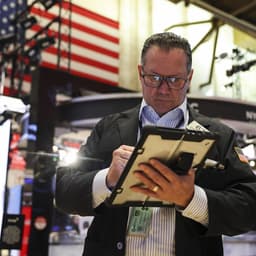
The spillover of higher energy prices
<p>The U.S. and Iran remain far apart on a ceasefire, as President Donald Trump warns on social media that "the clock is ticking." The standoff is rattling global markets. Government bonds are rising, pushing up borrowing costs. And oil prices are moving higher this morning, as traders worry that the war in the Middle East will lead to a prolonged period of higher inflation. We'll discuss. And later: how Brazil became BYD’s biggest market outside of China.</p>


What war in the Middle East is costing you
<p>The war in Iran has cost Americans more than $40 billion in additional fuel costs, according to an analysis from Brown University’s Watson School of International and Public Affairs. The costs go beyond just what Americans pay at the pump; higher diesel costs are factoring into rising prices for other consumer goods, too. This morning, we'll do the numbers. Plus, after a slowdown, "vertical dramas" are putting some Hollywood crews back to work.</p>

Why you won't find horse racing bets on prediction markets
<p>Tomorrow is the Preakness Stakes, the second event in the Triple Crown. Betting on horse racing in the U.S. has declined by more than 50% over the last few decades. And while you might think platforms like Kalshi and Polymarket would see opportunity in horse racing bets, they haven't made inroads. Why don’t prediction markets have a horse on that race? We explain. And later, we'll do the numbers on defense lobbying.</p>
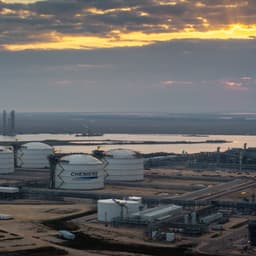
A surge in natural gas exports
<p>"LNG is the next growth story of the next decade," says Kent Britton, CEO of the Port of Corpus Christi. Liquefied natural gas exports are expected to grow 30% in the U.S. in the next year and a half. That growth is driven mostly by new and expanding LNG export projects along the Gulf Coast. What does it mean for the global energy market and coastal economies? But first: inflation, imports, and U.S.-China trade deals.</p>
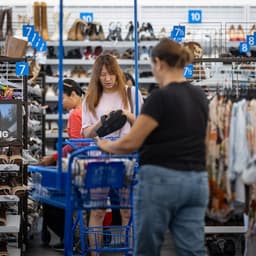
The U.S. spending spree continues
<p>Retail sales in April were up 0.5% compared to the month before and are up 4.9% from a year ago, according to the Census Bureau. So are retail sales higher because consumers are resilient and buying more stuff, or are we spending more just because prices are higher and the stuff we want is more expensive? We discuss. Then, in search of cleaner energy, two new power transmission lines are connecting Quebec to New York and Massachusetts.</p>
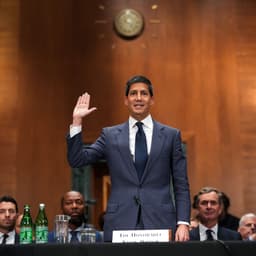
The Federal Reserve under Kevin Warsh
<p>Kevin Warsh is officially the next chair of the Federal Reserve. The Senate voted to confirm him to a four-year term on Wednesday. He’ll replace Chair Jerome Powell, who led the central bank for the last eight years. He’ll face a challenging economic environment, worsening inflation, and pressure from President Donald Trump to cut rates. Plus, a look at how median actually rents fell in April and why one Arizona coffee roaster is unable to claim tariff refunds.</p>
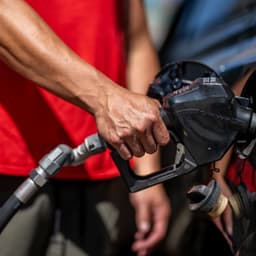
What does the federal gas tax go toward?
<p>To address pain at the pump, President Donald Trump and some Congressional Republicans are floating the idea of temporarily pausing the federal gas tax. The thing is, that gas tax helps pay for the construction and maintenance of roads, bridges, and more. Today, we delve into how the tax shows up in our everyday lives. Then, we head to Boston to hear how a small college there is serving low-income, first-generation students.</p>
Debt is on the rise
<p>Household debt ticked up slightly in the first three months of this year, increasing by $18 billion, according to the New York Fed. Credit card debt is actually down slightly, but mortgage balances, home equity lines of credit, and car loan balances all grew. We unpack. Plus, later in this morning's show, how might economic tensions appear at the summit between President Donald Trump and Chinese President Xi Jinping?</p>
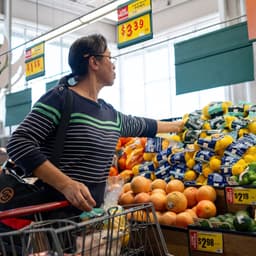
Consumer prices were up a lot in April
<p>Prices in the U.S. were up 3.8% year over year in April. That's a faster rate of annual inflation than we saw in March. A main driver was higher energy prices, a result of the war with Iran. Those price increases are taking a bite out of consumer wages, but the pain may be temporary. Plus, small businesses are hanging in there. And, we'll preview President Donald Trump's meeting with Chinese President Xi Jinping.</p>
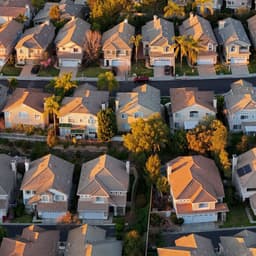
What's behind sluggish home sales?
<p>In late February, mortgage rates dipped below 6%, and affordability was beginning to improve. In April, people bought and sold more homes than they did the year before, but not by much. The reason? A whole new source of uncertainty brought on by war in the Middle East. Later in the show: While specialty farmers aren't caught in trade war crosshairs the way commodity farmers are, they still have plenty to worry about domestically.</p>
