
Business Daily
The daily drama of money and work from the BBC.

10

Taking Stock: what French protests, Netflix data and the Alberta referendum reveal
<p>Will Bain is joined by Toronto-based tech journalist Takara Small and Zambia-based consultant Trevor Simumba to examine the impact of protests in France on businesses and the wider economy, what Netflix's latest data and job-cut plans signal about the streaming giant's future, and what a referendum in Alberta, Canada, highlights about the province's future.</p><p>Producer: Rebecca Smyllie</p><p>You can email the team: businessdaily@bbc.co.uk</p><p>(Picture: A protester throws a projectile through tear gas amid clashes with the French riot police at the Place de la Republique during a demonstration against the...

Power Players: Has Netflix hit a wall?
<p>Netflix transformed the entertainment industry, changing how audiences around the world discover and consume media. But after announcing plans to cut 1,000 jobs and losing its content and film chiefs, questions are growing about the streaming giant's future. Has Netflix reached a turning point, or does it still have room to grow? Will Bain and Rahul Tandon are joined by Simon Gallagher, a former Netflix head of content and acquisition who worked with co-founder Reed Hastings and later at Hulu.</p><p>Producer: Matt Lines</p><p>You can email the team: businessdaily@bbc.co.uk</p>
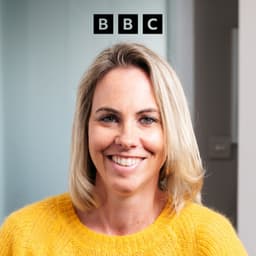
Founders: Olio CEO Tessa Clarke's fight against food waste
<p>Tessa Clarke is the co-founder and CEO of Olio, the food-sharing app helping millions of people reduce waste by sharing food and household items with their neighbours. She explains how a simple idea grew into a global movement, the challenges of convincing investors to back it, and why changing human behaviour may be key to tackling climate change. </p><p>Presenter: Leanna Byrne Producer: Barbara George </p><p>You can email the team: businessdaily@bbc.co.uk</p><p>(Picture: Tessa Clarke. Credit:Annabel Staff)</p>
Follow the Money: The cost of sending money home
<p>Some economies are increasingly dependent on migrants sending money home to their families. But how much does it cost, and who's making money from a business worth around $900 billion a year? Sam Fenwick follows a transfer from a housekeeper in London to her family in the Philippines, tracking the money every step of the way. We talk to one of the world's biggest transfer companies about the fees involved, and to a remittances expert who argues that while costs have fallen, they still need to come down further.</p><p>Producer: Gideon Long</p><p>You can email the...
What China's solar panel obsession means for the world
<p>China's latest trade data show another huge surplus, putting the country on course for what could be a record $1.5 trillion trade surplus this year. In the first of two episodes examining China's export machine, we look at the country's massive solar panel industry. We hear from the so-called Sun King, Dr Jerry Shi, China's first solar billionaire, about the rise of solar power in China. Ed Butler also examines how solar power and other green technologies have helped drive the global response to climate change, while critics raise concerns about oversupply and its impact on industries and economies around...

Taking Stock: Who owns Space?
<p>From Elon Musk and Jeff Bezos, to China and India, companies and countries are pouring billions of dollars to get ahead in the space industry.</p><p>It's not just about interplanetary exploration, huge investment is going into satellites, defense systems and location technology.</p><p>Rahul Tandon speaks to Carissa Bryce Christensen, Founder and CEO of BryceTech and Professor of Space Security, Dr Namrata Goswami to discuss who winning the race and who might be coming up from behind.</p><p>Producers: Amber Mehmood and Matt Lines Editor: Stephen Ryan</p><p>PHOTO: The planet Mars is shown...
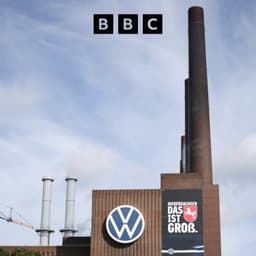
Power Players: How did VW go off track?
<p>Competition from China, weaker sales and a slower-than-expected shift to electric vehicles have left Volkswagen facing its biggest challenge in decades. VW says up to 100,000 jobs could go, with some of its biggest German plants facing closure. Rahul Tandon, Michelle Fleury and Will Bain look at whether VW can turn things around, and whether its troubles reflect wider problems in Germany's economy. </p><p>Producer: Matt Lines</p><p>You can email the team: businessdaily@bbc.co.uk</p><p>(Picture: Volkswagen's main German plant in Wolfsburg, Germany, September 17, 2026. Credit: REUTERS/Liesa Johannssen)</p>

Listen again: The supermarket billionaire, John Catsimatidis
<p>Greek-born billionaire John Catsimatidis rose from working in a New York grocery store to build the Gristedes supermarket chain and a wider business empire after leaving university before graduating. Now head of the Red Apple Group, with interests spanning real estate, energy, aviation and media, he remains a prominent figure in US business and politics, regularly discussing business with President Trump, despite setbacks including a collapsed airline venture and an unsuccessful run for New York mayor.</p><p>Presenter: Leanna Byrne Producer: Amber Mehmood</p><p>You can email the team: businessdaily@bbc.co.uk</p><p>[This episode...
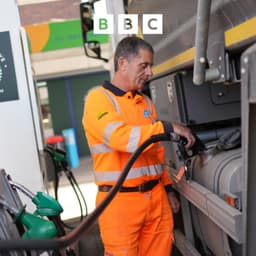
Follow the Money: why is diesel so expensive?
<p>The war in the Middle East has pushed up crude oil prices this year and that's had a knock-on effect on the price of refined oil products like diesel. But after months of conflict, the Gulf's oil-producing nations are now getting most of their exports out, so why hasn't the price of diesel come down? And will it fall now that Donald Trump has reached a deal allowing Russia to export diesel again? The BBC's Sam Fenwick traces the journey of a barrel of oil from the Middle East to the petrol pump, looking at the rising costs along...

Why are birth rates falling across the world?
<p>Birth rates are falling across much of the world, raising questions about the future of ageing populations and economies. We look at why people are having fewer children, from the financial pressures facing couples in the US to changing social attitudes. We also examine government efforts to reverse the trend, including Finland's generous family support system and Hungary's costly incentives for larger families.</p>
