
The Bitcoin Infinity Show
The Bitcoin Infinity Show is a Bitcoin podcast hosted by Knut Svanholm and Luke de Wolf. In each episode, we explore everything from deep philosophy to practical tools to emit freedom dioxide to expand your freedom footprint. Join us as we head toward the orange glowing light together!

10
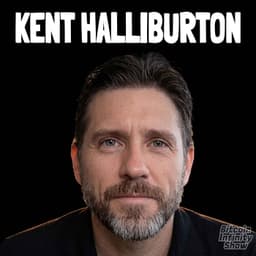
Mining as a Service and BIP-110 with Kent Halliburton | Bitcoin Infinity Show #214
<p>Kent Halliburton joins the Bitcoin Infinity Show to talk about why he thinks producing your own Bitcoin beats buying it on an exchange, and how mining as a service fits into that picture. He and Knut get into BIP-110 and Kent's position as a proud fence sitter, the growing distrust of Bitcoin Core, and the news that a group of large financial firms has pledged funding toward Bitcoin network security. They also cover Bitcoin mining economics, self-custody, hash rate signaling through Ocean, ossification, and what it would take to build a thousand year institution around the separation of money...


Jeff Booth on User Activated Soft Forks | Bitcoin Infinity Show #213
<p>Jeff Booth joins the Bitcoin Infinity Show to talk about user activated soft forks, why economic nodes rather than miners decide what Bitcoin is, and why he expects these consensus battles to keep repeating for decades. He argues that the block reward alone is enough to secure Bitcoin all the way to 2140, that the free market already resolves mining centralization by punishing miners stuck with high cost energy, and that most Bitcoiners still hand their time and spending to the fiat system while lecturing everyone else. Jeff also explains ORANGE JUICE, the permanent capital company he and his ego...
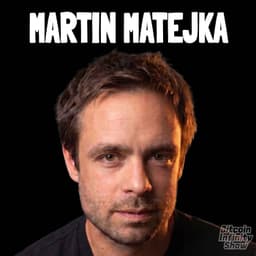
How Bitcoin Backed Lending Actually Works with Martin Matejka | Bitcoin Infinity Show #212
<p>Martin Matejka joins the Bitcoin Infinity Show to talk about using Bitcoin as collateral for loans without handing your coins to a trust me bro platform like the ones that collapsed in the last cycle. He and Knut get into how Firefish uses Bitcoin layer one tools like multisig, timelocks, and partially signed transactions to keep counterparty risk low, why borrowing in fiat is really a bet against a failing currency, and how self-custody changes what it even means to own an asset. The conversation widens into real estate as a store of value, the illusion of ownership under...

A Core Dev Responds to the Capture Articles | Jon Atack | BIS #211
<p>Jon Atack returns to the Bitcoin Infinity Show for his second appearance to talk through the Bitcoin Core governance questions raised by Hodlonaut's Capture article series, and why he believes Core's instinct to circle the wagons and shoot the messenger has hurt its public image more than any outside misinformation. He gives his neutral read on the contested BIP-110 soft fork, the renewed pushes to ban Luke Dashjr, the flood of AI-generated BIP spam, and the growing centralization of Core maintainership, arguing that healthy alternative implementations and honest self-custody are what actually strengthen Bitcoin. The conversation closes with a...
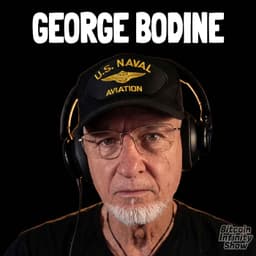
Your Paper Bitcoin Is Basically Worthless | George Bodine | BIS #210
<p>George Bodine joins the Bitcoin Infinity Show to talk about Bitcoin self-custody, running a node, and why paper Bitcoin held through treasury companies and ETFs carries counterparty risk that real cold storage does not. Knut and George dig into the Core versus Knots debate, BIP-110, the power law disagreement, and the risks facing Bitcoin treasury companies as financialization accelerates. Along the way they explore creativity as the opposite of productivity, the discipline of dropping your ego, and what a life of integrity looks like through the eyes of an artist and former fighter pilot. </p> <p>Connect with George: <...

Dr. Jack Kruse Uncensored | BIS #209
<p>Dr. Jack Kruse joins the Bitcoin Infinity Show for an uncensored conversation, after Natalie Brunell declined to release his appearance on her podcast. He lays out his Fabianism thesis, the idea that the same incremental "Landauer attack" he believes centralized Western medicine through the Flexner Report is now being run against Bitcoin to turn it from money into mere digital gold. Knut and Jack go deep on BIP-110, spam and UTXO bloat, ossification, node sovereignty as Bitcoin's immune system, Austrian economics, self-custody, and the El Salvador and Bukele decentralized medicine law, with Jack arguing that node runners, not miners...
The Data Behind the BIP-110 Fight | Renaud Cuny | BIS #208
<p>Renaud Cuny joins the Bitcoin Infinity Show to talk about measuring the monetary health of the Bitcoin network through hard data, from the percentage of block space consumed by spam to the concentration of mining pools and hardware manufacturers. He walks through his Bitcoin Portal project, which scores decentralization and security across mining, block space, and node diversity, and explains why direction matters more than any single number. The conversation digs into BIP-110, the OP_RETURN debate, Bitcoin Knots adoption, hash renting through Ocean and Datum, and what self-custody and node-running mean for keeping Bitcoin sound money. </p> <p>...

Bitcoin Core's Governance Problem | Secure Sovereign | Bitcoin Infinity Show #207
<p>Josh, AKA Secure Sovereign, joins the Bitcoin Infinity Show to talk about Bitcoin Core governance, the case for alternative node implementations, and Bitcoin Commons, a new Rust implementation he says specifies and locks down Bitcoin consensus while making it far easier to fork and run your own node. Josh recovered a life-changing stack of Bitcoin he had held since 2010, then turned to analyzing Bitcoin Core as an informal oligarchy, running a full-chain analysis of BIP-110 across more than 900,000 blocks and building selective synchronization so node runners can skip non-monetary data. The conversation covers self-custody, consensus specification, mining decentralization, the...

Why BIP-110 Will Win with Bitcoin Mechanic | Bitcoin Infinity Show #206
<p>Bitcoin Mechanic joins the Bitcoin Infinity Show to talk about BIP-110, the minority soft fork now activating on hard mode, and why he believes node runners rather than miners ultimately control the network. Drawing on his front-row view of the 2017 block size wars, he breaks down the game theory that pushes miners toward enforcing new consensus rules, the UTXO bloat and OP_RETURN abuse that motivated the fork, and how Ocean, Datum, and hash rate renting are quietly redecentralizing Bitcoin mining. The conversation closes on a reframing of censorship resistance and self-custody, arguing that keeping Bitcoin usable as money...

The Praxeology of Privacy with Max Hillebrand | Bitcoin Infinity Show #205
<p>Max Hillebrand joins the Bitcoin Infinity Show to talk about his new book The Praxeology of Privacy and why privacy sits at the foundation of sound money, self-custody, and the entire cypherpunk project. The conversation traces the prehistory of Bitcoin from David Chaum's anonymous eCash through Hal Finney's proof of work, explains how surveillance distorts prices the same way money printing does, and digs into the tools that make resistance cheap, including CoinJoin, the Lightning Network, and the new White Noise messaging protocol over Noster. Along the way Max makes the case that defending your privacy is far cheaper...
