
Daybreak
Business news is complex and overwhelming. It doesn’t have to be. Every day of the week, from Monday to Friday, Daybreak tells one business story that’s significant, simple and powerful. Hosted from The Ken’s newsroom by Snigdha Sharma and Rachel Varghese, Daybreak relies on years of original reporting and analysis by some of India’s most experienced and talented business journalists.

10
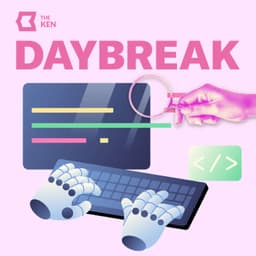
AI is writing more code in India. Fewer eyes are checking it
<p>A study gave 16 experienced developers the best AI coding tools available.</p><p>They predicted they'd be 24% faster. They felt 20% faster. They were actually 19% slower — and still didn't believe it when told.</p><p>That gap between belief and reality is now being deployed at enterprise scale.</p><p>TCS, Infosys, Wipro, and Cognizant have committed to over 50,000 AI coding licences each. Bugs per developer are up 50%. Code is reaching production without any human review.</p><p>And the senior engineers who could catch the mistakes are buried too deep in the flood to look up.</p><p>Is In...

Reliance's broken promise is India's energy crisis
<p>Seventeen years ago, Reliance Industries made a promise that was supposed to change India's energy future. </p><p>It didn't. </p><p>Today, with a war raging in the Middle East, the Strait of Hormuz mostly closed, and Qatar — India's single largest gas supplier — unable to guarantee supplies, that broken promise has become a full-blown crisis. India finds itself caught between Trump, Tehran, and its own structural failures. The IEA calls it the worst energy crisis in history.<br> <br>For India, it may be the moment that finally forces a reckoning.</p><p>Tune in.</p><p>Daybreak is pr...
Your missed SIP could be making banks tens of crores every month
<p>When your SIP bounces, your bank charges you Rs 500. The mutual fund that missed the investment? Charges you nothing. That gap is not an accident.</p><p>In this piece, The Ken's Mutasim Khan traces how India's banks have quietly turned missed SIP debits into a revenue line — one that costs them roughly Rs 25 to process, and nets them hundreds of crores a month. The people paying most are first-time investors in smaller cities, often unaware the charge even happened.</p><p>This is a read aloud of Mutasim's original story, by Snigdha Sharma, on Daybreak.<br><br></p><p>...
Why the man who built Practo to find doctors is now using AI to find disease first
<p>India's life expectancy has doubled since 1950. But 65% of deaths are still from diseases caught too late. </p><p>Cent, the new startup from Practo's founder, thinks it has an answer: full-body AI scans that find risks before they become diagnoses. </p><p>At Rs 20,000–30,000 a scan, it's already found critical findings in hundreds of patients — with zero false positives, it claims.</p><p>But Cent doesn't diagnose. It doesn't refer. And it has no proprietary technology. </p><p>So what exactly are you paying for — and what happens after it finds something?</p><p>Daybreak is produced from the newsro...
Anthropic built an AI that can supposedly break into anything. Then it forgot to lock its own door
<p>Anthropic has spent years building a reputation as the AI company that actually cares about safety. </p><p>Then, in the span of two weeks, it leaked an unannounced model, exposed its own source code, and accidentally handed hackers a blueprint of its most widely-used product. The fix came in 24 hours. The blueprint can't be unlearned. </p><p>And the companies that trusted Claude Code with their deepest systems are still running on publicly documented defences. </p><p>If the most careful AI company couldn't prevent this, what does that mean for everyone else?</p><p>Tune in.</p><...
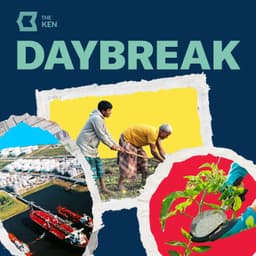
Can India's $22 billion fertiliser subsidy keep the Gulf War off your plate?
<p>The Indian government approved a ₹41,534 crore fertiliser subsidy for the upcoming kharif season last week, a 12% increase from last year. The move comes as the Gulf War has severely disrupted India's fertiliser supply chains, with urea prices jumping 65% in just 40 days. </p><p>India is the world's second largest fertiliser importer, and the Strait of Hormuz carries a significant share of both the finished fertilisers and the gas needed to make them domestically. The kharif season, which produces roughly 100 million tonnes of rice, begins in June. </p><p>In this episode, host Snigdha Sharma looks at India's fertiliser subsidy po...
India's data centre boom is a bet on water it doesn't have
<p>India is building data centres at unprecedented speed to support cloud services, AI, and digital growth. At the same time, cities across the country are struggling with water shortages and repeated contamination of drinking-water supplies.</p><p>A United Nations report describes this condition as water bankruptcy. It is the stage where water systems continue to function, but only by drawing down reserves that cannot recover fast enough.</p><p>In this episode, host Snigdha Sharma looks at how India’s data centre push fits into that reality, drawing lessons from cities abroad where similar tensions have already surfaced.</p>...
Yoga over Python: how India’s new college curriculum rewards the easiest skills
<p>India's new undergraduate framework was supposed to fix a broken system — where only 8% of graduates land jobs that match their degrees. </p><p>The fix? Give students hundreds of courses to choose from, blend formal education with vocational training, and make them more employable. But when every course carries the same two credits, students do the math quickly and the easier course wins.</p><p>Now universities are scrambling, edtechs are stepping in to teach core curriculum, no one's quite sure who's in charge and it's not really clear if this reform is fixing employability yet.</p><p>Tune in...
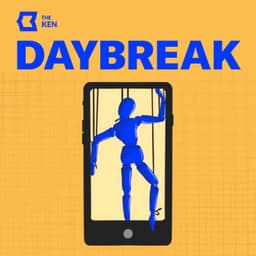
If Razorpay is right about AI, you may never open a payment app again
<p>At a fintech conference in February, Razorpay showed a demo. </p><p>A user ordered food on Zomato by voice and paid — without opening a checkout page or a UPI app. No friction and no redirects. Just a job done end-from-end.</p><p>The same week, OpenAI quietly rolled back its own in-chat shopping agent.</p><p>Razorpay is calling this the biggest disruption to payments since UPI. But agentic commerce raises questions that a demo can't answer — around trust, fraud, consent, and who's liable when an AI spends your money.</p><p>Is India ready for that? Is anyon...
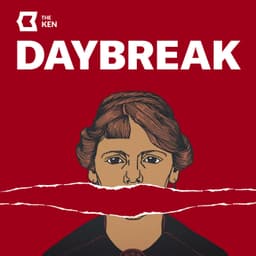
India's new IT rules could turn every content creator into a publisher. Without the protections
<p>A cartoon reposted. An account restricted. A takedown notice with no warning and no appeal.</p><p>India's new IT rules give platforms three hours to remove flagged content — the shortest window anywhere in the world. But a draft amendment published last month could go even further, potentially treating anyone who posts about current affairs as a publisher. Without the protections that come with it.</p><p>For millions of creators, anonymous users, and global tech platforms, the stakes just got harder to ignore.</p><p>The deadline to push back is April 14th.</p><p>Tune in.</p><p>...
