

AuDHD Flourishing
The monotropic neurotype of Autism + ADHD holds strengths and challenges. Typical advice often doesn't work for us! Your AuDHD host, Mattia Maurée (they/them), shares research, lived experience, and practical advice from coaching over 400 neurodivergent folks. They focus on feeling better first, before tackling the big life design questions. You're doing great, you belong here, and it's possible to feel a lot better. Hosted on Acast. See acast.com/privacy for more information.

10

138 Your Money Big Picture
<p>I would guess that most AuDHDers struggle with money in one way or another. Saving or planning for the future can be particularly difficult to emotionally attach to in the same way we connect with wanting something in the present moment. </p><br><p>I use several tools to stay emotionally connected to my money big picture, and spoiler alert none of them is a budget: </p>tracking all income closely a multi-tab finances overview spreadsheet that includes monthly income over time + a debt tab with all monthly paymentscalculating Net Worth* monthly (using a spreadsheet I found online) <p>...

137 Spending and Money Unfairness
<p>This & next week are two episodes on money & finances as a follow up to last week's interview (more from Hyperfocus here).</p><br><p>Justice sensitivity can highlight the unfairness we often feel between our financial situations and those of people who haven't struggled to find and keep work. For example, AuDHDers often experience conflict with bosses who think we ask too many questions or have a bad "vibe." </p><p>For me, acknowledging and soothing that unfairness with things beyond just spending has been important. </p><br><p>The episode also touches on comparison with others, consumerism, and...
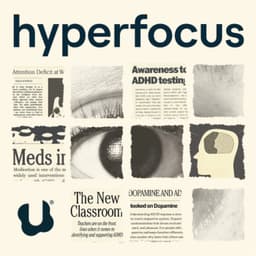
136 Financial Therapy with Christine Hargrove
<p>Thanks again to Hyperfocus with Rae Jacobson for sharing this interview with financial therapist Christine Hargrove. </p><p>She shares ADHD-focused advice that is useful for AuDHD folks as well! And the next two weeks will touch on other financial topics from this foundation.</p><br><p>I especially love the line, "The best budget is one you can follow on your worst day" </p><br><p>Learn more about Hyperfocus with Rae Jacobson here! </p><p><br></p><h3>AuDHD Flourishing resources:</h3>Transcript Doc (often a few weeks behind, but we do catch up!)Mattia's NewsletterLike Your...
Paper Planners & Tasks Feeling Real
<p>I just started using a paper planner again for the first time in many years, and the coolest thing is noticing that calendared blocks of time feel more "real" to my brain when I've written them by hand. That tangibility in turn seems to be making it easier to stick with things. </p><p>Caveat that it can always be the initial dopamine surge of any new system! That said, if it's working, I say try new tools anyway, even if they only work for a few months ;)</p><p><br></p><h3>AuDHD Flourishing resources:</h3>Transcript Doc...
135 Slow Processes are Frustrating
<p>Sometimes... a process is happening, internally. It can be integration, change, growth, positive disintegration... and sometimes it's unclear. Either way, the uncertainty can be disconcerting and frustrating!</p><p><br></p><h3>AuDHD Flourishing resources:</h3>Transcript Doc (often a few weeks behind, but we do catch up!)Mattia's NewsletterLike Your Brain community space (Patreon/Discord)<p > Hosted on Acast. See acast.com/privacy for more information.</p>
134 Worst Tasks for AuDHDers
<p>With an interest-based nervous system + AuDHD cyclical energy, the hardest tasks for us are</p><p>Boring</p><p>Annoying</p><p>High Stakes and/or</p><p>Difficult</p><br><p>The episode covers how and why they're difficult, and some starting points for each one.</p><br><p>The steps from later in the episode:</p>If you're struggling to start something, identify if it's Boring, Annoying, High Stakes, or Difficult.Give yourself compassion for why that makes this task hard to do right now, and tell yourself that you don't actually have to do it right...
133 Anger and Aloneness
<p>If you're feeling angry lately, that makes a lot of sense! It's not a bad emotion. In fact, it can feel quite motivating to create change. </p><p>But what if you are feeling isolated and/or don't have capacity to directly create that change right now? </p><p>That's where nourishing and care work come in, even if they're only for you (for now).</p><p>While I don't use the word self-care in the episode, that's in part the kind of nourishing I mean. </p><p>Once your capacity is higher, you'll be able to build more...
132 Is This Your True Desire?
<p>Sometimes I mix up true desires with interests and hyperfocus. But what about the persistent and even lifelong interests? Where do they fit in?</p><p>This episode is for anyone who wants to throw their life out the window and start over when in the throes of a new interest ;) You're not broken!</p><p><br></p><h3>AuDHD Flourishing resources:</h3>Transcript Doc (often a few weeks behind, but we do catch up!)Mattia's NewsletterLike Your Brain community space (Patreon/Discord)<p><br></p><p><br></p><p > Hosted on Acast. See acast.com/privacy for more i...
131 Disordered Eating and AuDHD
<p>This goes along with the interview about Embodied Exercise. For many people, the other side of that coin is eating. And rates of disordered eating are higher among Autistics, ADHDers (especially women), and trans and gender non-conforming folks.</p><p>The episode only briefly touches on ARFID, an eating disorder more likely to affect autistic people for multiple reasons. If you know someone who could be an expert interview on ARFID, please send them my way.</p><br><p>Oh another fun fact I didn't mention... it's possible that the "obesity epidemic" (unscientific nonsense) was literally caused by dieting...
Your Core Self-Care Need - Repost
<p>Most people have one or two core self-care needs that, if they're met, everything else feels easier. This episode is about how to figure out yours... and what to look out for when you hear people preaching about their own!</p><p>There's also acknowledgment that your neurodivergent body and brain may process things in different ways, so the following questions may not be that useful for you.</p><br><p>Figuring out your core self-care need or needs (just a jumping-off point!): </p>Thinking back to times in your life when things felt the easiest, what was your...
