

Exploring Prosperity- Challenging Pessimism in the US
Challenge Pessimism. Explore the Complexity of Progress. Headlines and survey results scream pessimism, but is it warranted? Join us on Exploring Prosperity as we delve into the complexities of human progress with leading thinkers across markets, economics, history, philosophy, and more. Discover how economic and societal factors shape our world, and gain a deeper understanding of the drivers of individual and societal prosperity and a fulfilling life. Our in-depth conversations may leave you empowered and optimistic about the future and equipped with insights to navigate the challenges and opportunities that lie ahead. Bob Dewey brings his expertise in investing and...

10

Are We Getting Weaker? Hard Money, Harder Virtues
<p>Are we actually progressing—or quietly getting weaker?In this conversation, I sit down with Aleks Svetski, author of The Bushido of Bitcoin, to explore a deeper question that sits beneath economics, technology, and politics: what actually drives long-term human progress?Many believe that fixing money—through systems like Bitcoin—can restore discipline, align incentives, and solve structural problems in society. But as Aleks argues, that’s only part of the story. Human nature, culture, and values ultimately determine whether societies rise or fall.We discuss:- Why hard money is necessary—but not sufficient- The role of character, virtue, an...


OpenAI’s Trillion-Dollar Obligations: Can the Math Work?
<p>In this episode of Exploring Prosperity, I sit down with investor Ram Ahluwalia to examine one of the most important — and least discussed — risks in the AI buildout.OpenAI reportedly has nearly $1 trillion in committed obligations tied to data center capacity and compute infrastructure. With revenue far below that scale, the key question is simple:Can the math foot?This conversation is not anti-AI. AI is clearly transformational. But the expansion of AI depends on capital markets. If funding conditions tighten, what happens to the trillion-dollar commitments already in place?We discuss:• OpenAI’s revenue performance obligations and data center e...

27 Million Reports: Will Congress Scale Back Financial Surveillance?
<p>More than 27 million financial reports are filed each year under the Bank Secrecy Act, flagging ordinary banking activity as “suspicious.” Yet, as the data shows, only 370 investigations were tipped off by these reports. In this conversation, Nick Anthony of the Cato Institute explains how U.S. financial surveillance expanded quietly over decades, why routine cash transactions now generate government reports, and how banks have effectively been deputized as law enforcement investigators. We discuss the real-world consequences for individuals, including account closures, the "sense of confusion" that comes with debanking, and the steady erosion of financial privacy.The interview also exam...

The One-Hour Problem: How High School Counseling Fails Families
<p>Families navigate the college decision process rarely—but the consequences can last decades.In this episode of Exploring Prosperity, I speak with Jon Carson, CEO of College Guidance Network, about why the traditional college guidance system no longer works—and why rising costs, declining ROI, and information asymmetry have made the decision riskier than ever.We break down the real math behind high school counseling, why most students receive only about one hour of guidance per year, and how parents are left without the tools they need to make informed decisions. We also explore how colleges market to families, how...

Crypto’s Institutional Reset: Why 2026 Changes Everything | Zach Pandl (Grayscale)
<p>In this episode of Exploring Prosperity, I’m joined by Zach Pandl, Head of Research at Grayscale, to explore why 2026 may mark the true beginning of crypto’s institutional era.We discuss how regulatory clarity — including the impact of Grayscale’s successful challenge of the U.S. Securities and Exchange Commission — shifted crypto from the margins into mainstream finance, and why Bitcoin ETFs were only the first step.Zach explains:</p><p>* What the “institutional reset” really means for crypto markets</p><p>* Why privacy is non-negotiable as institutions move on-chain</p><p>* How AI increases the need for cryptographic...

Growth Without Jobs: AI and the End of the Old Capitalist Bargain
<p>I sat down with Jordi Visser to discuss a historically new phenomenon: economic growth without job growth—and what artificial intelligence means for the future of work, capital, and capitalism itself.We discuss I why economic growth is increasingly happening without job creation and what artificial intelligence means for the future of work and capitalism. This conversation explores how AI is breaking the historic relationship between capital and labor, why this moment feels different from past technological shifts, and why the transition path may be more destabilizing than the destination itself.Read my Substack on this essay here: https://ro...

Inflation Isn’t 3% — Here’s Why the Official Numbers Are Wrong
<p>Inflation isn’t 3%. In this episode of Exploring Prosperity, I’m joined by Stefan Rust, CEO of Truflation, to explain what real-time inflation data is actually showing — and why the official CPI number may be missing what’s really happening to prices.See my essay about this interview here: We discuss how Truflation measures inflation daily across thousands of goods and services, how its methodology differs from CPI and PCE, and what the data reveals about tariffs, energy prices, food costs, and the U.S. dollar. We also explore whether inflation can be anticipated at all, how global inflation dynamics...

"It’s a Rigged Game": Larry Lepard on the Moral Case for Bitcoin
<p>In this episode, I sit down with investment manager and author Lawrence Lepard (The Big Print) to examine how America’s monetary system actually works—and why its failures increasingly feel moral, not just economic.</p><p>Larry breaks down the Cantillon Effect: how Federal Reserve money creation and artificially low interest rates disproportionately benefit Wall Street, large financial institutions, and asset owners, while eroding the purchasing power of wages and savings on Main Street. What emerges is a system that rewards proximity to newly created money rather than productive contribution.</p><p>We discuss what Larry calls the “Gradua...

How Schools Can Heal a Generation: Meera Viswanathan on Hope, Learning, and the Social Media Trap
<p>Ethel Walker head of school Meera Viswanathan joins Exploring Prosperity to explain what’s really happening to today’s students — from the rise of social media, smartphones, and anxiety to the decline of confidence, resilience, and curiosity.Drawing on insights aligned with Jonathan Haidt, The Anxious Generation, and current research on teen mental health, Meera breaks down:- How phones and social media are reshaping childhood- The real drivers behind rising anxiety and self-doubt- Why schools are struggling — and how to fix them- What great teachers and parents can do right now- Why education is still a fundamentally hopeful institut...
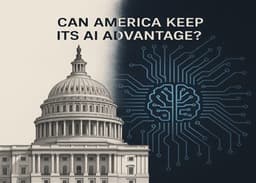
Can America Keep Its AI Advantage?
<p>Artificial intelligence is transforming the global economy — but will America stay ahead? In this audio edition of Exploring Prosperity, host Robert Dewey examines whether U.S. innovation can outpace regulation, comparing today’s AI revolution to past eras when new technologies reshaped productivity, jobs, and global power.</p><p>From Silicon Valley’s open-source momentum to Europe’s regulatory headwinds and China’s centralized push, this essay explores the balance between freedom, experimentation, and control — and why the future of prosperity may depend on which model wins.</p><p>Topics include:</p><p>* The real drivers of America’s AI edge</p><p>...
