
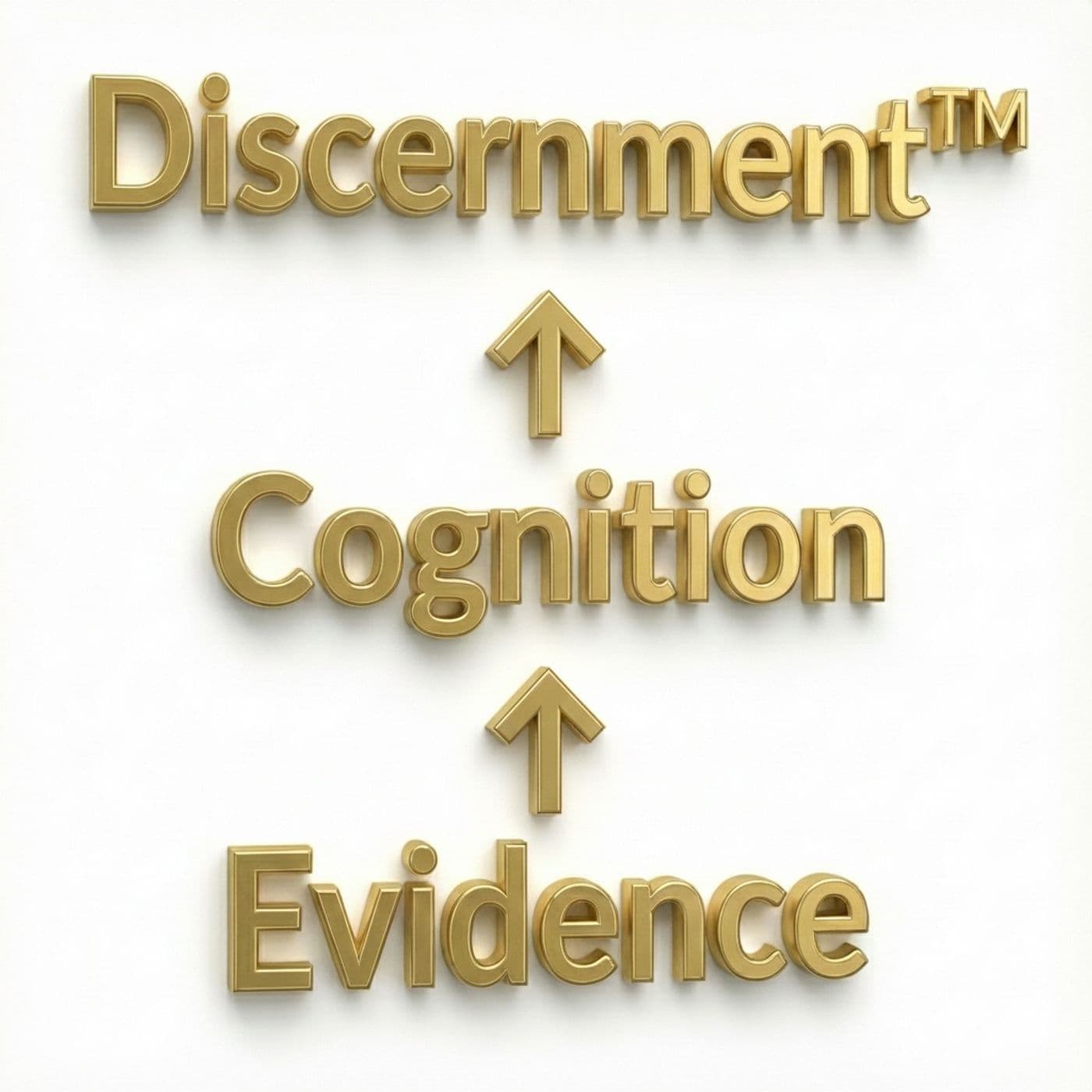
Evidence → Cognition → Discernment™️ - Your Pathway to AI Leadership
Fusion Bridge — Pathway to AI Leadership explores how people can collaborate with AI without outsourcing judgment. The spine is a three-step method: Evidence → Cognition → Discernment — a bridge from what’s scattered to what’s chosen. Through essays, reflections, and practical examples, I show how the Context & Critique Rule™ keeps thinking visible, decisions explainable, and responsibility human.

10

AI Workflow Redesign as the New Apprentice Proving Ground
The provided text argues that artificial intelligence is currently dismantling the traditional developmental rungs where junior workers once learned professional judgement. To solve this, author Greg Twemlow proposes a new apprenticeship model focused on AI workflow redesign, where novices act as systems interrogators rather than mere production clerks. By mapping organisational processes using ANSI syntax, apprentices identify where machines can handle high-volume tasks while ensuring human discernment remains the final decision gate. This approach addresses the mapping problem—the difficulty firms face in integrating AI effectively—by leveraging the fresh perspective of the beginner under the expert guidance of a ment...


Why an AI World Needs a 2,400-Year-Old Philosopher
In an age dominated by artificial intelligence, Greg Twemlow argues that we must adopt the Socratic method to maintain our intellectual independence. He warns that relying on the effortless fluency of machine-generated answers leads to a dangerous state of cognitive passivity and unearned certainty. To counter this, individuals should treat AI as a challenging interlocutor rather than a definitive oracle, using rigorous cross-examination to expose hidden biases and logical contradictions. By embracing epistemic humility—the honest admission of what we do not know—we create the necessary friction for genuine understanding. Ultimately, the text suggests that our sovereignty as thinkers depe...

The Formation Debt We Cannot See
Greg Twemlow explores the concept of formation debt, which occurs as artificial intelligence increasingly automates the entry-level tasks once performed by human novices. This shift creates an immediate productivity dividend for companies, but it simultaneously removes the essential "apprenticeship" through which young workers develop professional judgment and expertise. By replacing junior roles with automated systems, the text argues that society is losing the developmental infrastructure required to produce the next generation of leaders and specialists. The consequences are often hidden because they result from a lack of hiring rather than sudden layoffs, leaving graduates stranded between education and adulthood. Ultimately...

The Reading Crisis Is Also a Crisis of Formation
Greg Twemlow explores the reading crisis as a fundamental failure in human formation, arguing that literacy is essential for developing personal agency and judgment. He introduces the Expression-to-Agency Pathway, which uses storytelling, peer rehearsal, and public presentation to help students gain confidence through lived experience. While artificial intelligence did not cause these educational issues, it can conceal the problem by producing high-quality work that masks a person's lack of true understanding. Twemlow contends that without mastering literacy, individuals risk becoming dependent on technology, ultimately losing their cognitive sovereignty. To prevent this, he advocates for educational methods that ensure humans remain...

The Machine Wants Your Compliance
In this essay, Greg Twemlow explores the intersection of human agency and technological systems by synthesising the philosophies of Albert Camus and Joseph Campbell. He argues that modern society acts as an impersonal machine that demands compliance through algorithms, bureaucracy, and a focus on efficiency over empathy. By examining Campbell’s mythic monomyth alongside Camus’s concept of the absurd, the author presents a framework for maintaining personal integrity against dehumanising forces. While Campbell provides the internal psychological spine to face one’s own fears and ego, Camus offers an ethical shield to resist systemic injustice and abstraction. Ultimately, the text s...

The AI-Machine and Mnemosyne, the Greek Goddess of Memory
This article by Greg Twemlow explores the intersection of artificial intelligence and human memory, using the Greek goddess Mnemosyne as a metaphor for deep recollection. The author describes a personal experiment where he used an AI "Connections Machine" to analyse a decade of his own writing to uncover hidden patterns and "revelatory" links between his past and future. He introduces the Context & Critique Rule, a framework ensuring that while technology can surface non-obvious relationships, human judgement remains the final authority on meaning. This process is central to his Formation Bridge concept, which provides a structured, asynchronous pause for individuals at...

Open Hand and the Directed Mind
Greg Twemlow’s essay explores the concept of human sovereignty and how individuals can maintain a sense of purpose without becoming trapped by rigid expectations. He argues that modern life and artificial intelligence often force us toward quick, superficial answers that may stifle personal growth. To counter this, the author proposes a philosophy involving an open hand, representing receptivity, and a directed mind, which provides necessary discipline. By integrating context and critique, humans can use technology as a tool for validation rather than allowing it to dictate their life’s direction. Ultimately, the text encourages a reflective tempo where meaning is a...

The Connections Machine
In this article, Greg Twemlow defines artificial intelligence as a connections machine that expands the boundaries of human discovery. He introduces the concept of pull potential, arguing that the technology’s greatest utility is its ability to draw out deeper insights from the user through collaborative inquiry. By moving beyond simple pattern matching, AI allows individuals to surface non-obvious relationships across vast bodies of knowledge, a process Twemlow calls Breakout Autonomy. However, he cautions that users must apply his Context & Critique Rule to ensure they remain the architects of their own work. Ultimately, the source emphasises that while AI can su...
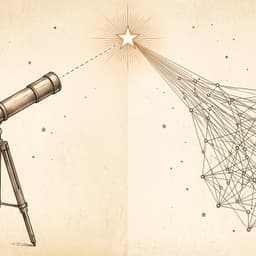
PwC Just Measured What I Named “the Judgment Gap”
In this article, Greg Twemlow highlights a significant alignment between his own theories and new global labour-market data from PwC. Both sources conclude that as AI automates execution, professional value is shifting away from mere output and toward high-level human judgment and creativity. Twemlow argues that this "judgment gap" requires organisations to deliberately reinvest the time saved by technology into better decision-making rather than simple cost-cutting. While PwC provides the statistical evidence for this shift, Twemlow offers a practical framework called the Context & Critique Rule to help individuals refine their discernment. Ultimately, the text suggests that in an AI-driven economy...

Reclaiming a Disposition Toward Thinking
Greg Twemlow argues that as artificial intelligence becomes increasingly fluent and competent, humans face a growing risk of cognitive disengagement by accepting machine output too readily. He introduces the metaphor of a red light to represent the moment an AI's response feels complete, signaling that the user must deliberately pause and enter a "Critique mode" to maintain their own curiosity. By treating AI as a cognitive muse rather than a mere answer-finding tool, individuals can engage in an iterative collaboration that elevates human reasoning to higher levels of abstraction. Twemlow suggests that true human value now resides in discernment and...
