

Analyzing Trends
Analyzing Trends is the essential podcast for leaders, strategists, and innovators seeking to decode the cultural forces shaping our future.

10
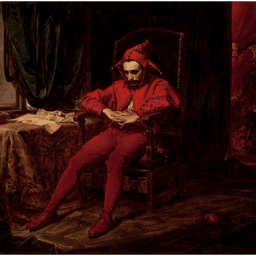
Stealing Jester’s Privilege
<p>We are living through a moment when “it was just a joke” has become a default way of speaking about serious things, from AI and product launches to corporate apologies and national policy. The old figure of the jester, who once used humor to tell hard truths to power, has been inverted: power now borrows the jester’s stance to float disruptive ideas, test public tolerance, and retreat into irony when challenged. At the same time, ordinary people rely on jokes and memes to cope with systems they no longer trust, turning contradictions into content that is instantly recognized but ra...


When the Iceberg Starts to Drift
<p>The mood of 2026 is friction at the surface. Reforms stall. Institutions grow brittle. Feeds fill with minor ruptures that never quite resolve. People talk about uncertainty, burnout, quiet cracking, but these are not abstract signals buried beneath events. They appear in work chats, neighborhood group texts, mutual-aid spreadsheets, and the steady accumulation of small adaptations. In that kind of world, the reassuring clarity of the iceberg begins to fail. When so much of the deeper story is already visible in the ways people improvise their lives, the task is less to dive for hidden truths than to learn how...

The Loneliness Problem We’re Not Really Solving
<p>Loneliness today is less a simple lack of company than a breakdown in shared meaning about what it means to be connected. Individuals move through days saturated with notifications, group chats, and parasocial ties yet feel unseen, because contact no longer guarantees recognition or obligation. Publicly, the experience is translated into shorthand complaints about busyness, missing “third places,” or being “chronically online,” while institutions reduce it to metrics like interaction frequency or screen time, counting what is visible but missing whether anyone truly holds anyone else in mind. This gap between private feeling and public criteria leads to misdiagnosis, blaming...

When the Iceberg Starts to Drift
<p>The mood of 2026 is friction at the surface. Reforms stall. Institutions grow brittle. Feeds fill with minor ruptures that never quite resolve. People talk about uncertainty, burnout, quiet cracking, but these are not abstract signals buried beneath events. They appear in work chats, neighborhood group texts, mutual-aid spreadsheets, and the steady accumulation of small adaptations. In that kind of world, the reassuring clarity of the iceberg begins to fail. When so much of the deeper story is already visible in the ways people improvise their lives, the task is less to dive for hidden truths than to learn how...

Looksmaxxing and the Cost of Being Seen
<p>Some of the most telling cultural warning signs do not look important at first. They arrive as spectacle, strange subcultures, compulsive self-performance, borrowed symbols, or people clearly pushing themselves too far. Then they get waved off as fringe behavior, filed under internet weirdness, or reduced to one damaged person making bad choices. But these moments are often not random at all. They are small exposures of a bigger pattern taking shape.</p><p>That is why narrative systems matter. They let you see how scattered signals connect, how isolated incidents point to shared pressures, and how culture quietly shifts...
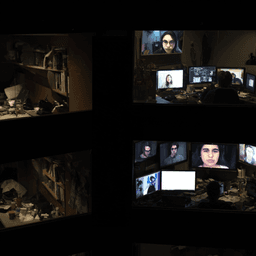
The Histories and Futures of Credentialed Intelligence
<p>“Machines scale knowledge; humans preserve wisdom. Intelligence, therefore, is not automation but awareness: the capacity to reflect, adapt, and ethically co-create new systems of understanding.” - Story Systems and Cultural Research (Routledge)</p><p>A lot of the conversation around AI still feels too narrow to me. We keep treating disruption as if it is mainly about tools getting better or jobs getting automated, when the deeper shift is really about institutional legitimacy. Consulting, higher education, and other knowledge systems were built on the idea that expertise was scarce, gated, and easy to certify. That story is starting to come...

Beyond the Chat Window
<p>Many AI tools look impressive in a chat window, but that fluency often hides how fragile they are once their outputs drive real decisions. When you move from conversational demos to production systems, it becomes clear that what seemed like intelligence was often narrative performance, polished language without clear evidence or causal steps behind it. The core argument is that trust comes from structure, not style: scaffolds that force models to show their reasoning, trace their sources, respect constraints, and know when to refuse. Culture is central to this, with Culture Mapping used to turn local norms, meanings, and...
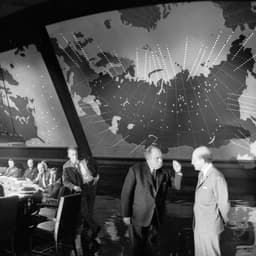
The Grammar of Crisis
<p>That gap between technical planning and lived stories is where crises go sideways. Leaders may think in terms of deterrence curves, transition pathways, or risk matrices, but publics respond inside narratives about who is being sacrificed, who is being heard, and whose reality still counts. When institutions treat scenarios as sterile forecasts instead of disciplined stories that expose the assumptions they rest on, they end up reinforcing the loudest myths without ever naming them. The value of working from stories rather than from abstractions is not sentimentality; it is precision about the actual medium of power. We do not...
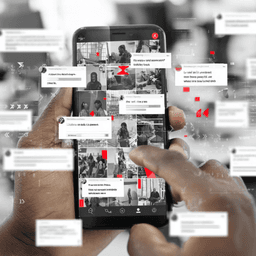
The Stories Pictures Tell
<p>There is a difference between encountering an image and looking at one. Most people, most of the time, do the former. A photograph arrives already wrapped in headlines, reactions, and forwarded commentary, and interpretation moves faster than observation ever gets a chance to. For cultural researchers and foresight practitioners, that gap is not just a media literacy problem. It is a methodological one. Images are among the most compressed forms of cultural information we have, and treating them as decoration rather than evidence means missing signals that language will not catch up to for months or years.</p><p>...
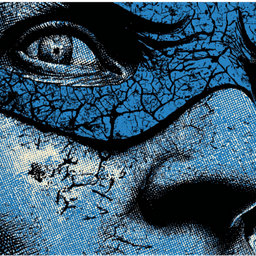
Cracks in the Architecture of Bro Culture
<p>When a code like bro culture comes under pressure, it tends to get louder before it gets smaller. The pattern is well documented: when a certain version of manhood feels like it is losing ground, it tends to exaggerate itself rather than adapt. We should expect the same from the bro. As younger audiences ask for vulnerability and connection instead of the man who never cracks, the people most invested in the old script are likely to get more insistent, more performatively "bro." That noise can look like proof that the code is winning. It is more often a...
