

The Journal of Space Commerce Podcast
This podcast focuses on issues related to the commercial space industry, and the impacts for people on Earth www.exterrajsc.com

10

Growing Solar Cell Wafers Directly from Gas
<p>Every satellite in orbit runs on sunlight. As constellations grow into the thousands, and companies talk seriously about putting data centers in orbit, demand for space-grade solar power is climbing fast. But the supply chain behind those solar arrays has a weak point most people never think about: the silicon wafer. It is estimated that 99 percent of the world’s crystal-growth equipment and wafer supply is Chinese-owned. And Beijing recently proposed export controls aimed squarely at thin-wafer technology for aerospace and defense.</p><p><p>“The challenge was that Chinese overcapacity collapsed the terrestrial wafer market and therefore wafer pric...


NASA Outlines Changes for the Artemis Program
<p>NASA said Friday that the designs and flight plans for two commercial crewed Moon landers have changed. The goal is a 2028 landing.</p><p><p>“Regardless of who goes first, both providers are planning for lunar landing missions in 2028.” Jeremy Parsons, NASA</p></p><p>The changes affect landers from Blue Origin and SpaceX. NASA gave details in a news release and at a news conference at Kennedy Space Center in Florida.</p><p>Artemis III will stay in low Earth orbit next year. Four astronauts will practice docking Orion with test versions of both landers. NASA officials said Arte...

Empowering the Next Generation of Space Entrepreneurs
<p>By all accounts Earth orbit will be a major driver of the world’s economy in the coming decades. Companies are developing processes for manufacturing and medical research in microgravity, as well as infrastructure for communications, satellite life extension and national defense. It is a very exciting time to be in the business of space.</p><p><p>“We see this platform as something which is very complementary with a future commercial infrastructure. And obviously, as investors invest and scale these opportunities, this is very valuable channel for them as well.”Sven Eenmaa, ISS National Labs</p></p><p>The IS...
Starship achieves orbit, and an Update on Starliner
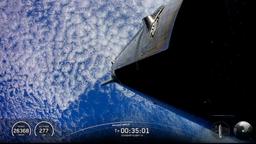
<p>A SpaceX Starship reached orbit on Test Flight 14, marking a significant milestone towards NASAs goal of building an ongoing human presence on the moon.</p><p>Starship lifted off as its launch window opened at 7:48 am local time at Starbase Texas. The super heavy booster performed mostly nominally, though one of the 33 Raptor engines did shut down prematurely. Still, the mission continued with a clean stage separation and booster return to Earth, splashing down in the Gulf of America about 8 minutes after launch. The booster simulated the manuver that will be needed for a capture back at Starbase, but...

Ex Terra Extra: NASA, Boeing Provide Starliner Update
<p>NASA still wants a second ride to the International Space Station. The obvious choice is Boeing’s Starliner, on which the taxpayers have already spent a lot of money. But the issues with the spacecraft are well documented.</p><p>On Monday, shortly after SpaceX’s Starship was reached orbit for the first time, NASA and Boeing officials held a news conference at the Kennedy Space Center to outline where the Starliner program stands, what is being done to correct the issues, and introduce the commander of the next crewed mission.</p><p></p> <br/><br/>This is a publ...
NASAs OIG Audits GRACE-C Mission, and Breaking the Germainium Stranglehold on Solar Cells
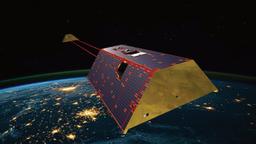
<p>A NASA OIG audit released Wednesday found the GRACE-C gravity mission on track to launch within its $658 million baseline. But the project has already used most of its cost reserves.</p><p>GRACE-C stands for Gravity Recovery and Climate Experiment-Continuity. NASA’s Jet Propulsion Laboratory, or JPL, manages the mission in partnership with the German Aerospace Center, known as DLR. The mission’s twin satellites will track changes in Earth’s gravity field to measure ice sheets, groundwater and sea levels.</p><p>NASA’s Office of Inspector General found the project had spent 61.2 percent of its project-managed cost reserves...

A New U.K. Space Strategy, and a Billion Dollar Raise for Stoke Space
<p>The British government has unveiled a new national space strategy. It consolidates $10.6 billion in defense, security and industrial growth spending through 2030, and that’s the first time all of that spending has been folded into a single framework.</p><p>The plan, which replaces the UKs 2021 space strategy, comes from the Department for Business, Innovation, Science and Trade. The new document names four priority areas: satellite communications, in-orbit servicing and manufacturing, space domain awareness, and assured access to space.</p><p>Connectivity programs get the largest share of the money, at $3.8 billion. That includes the Connectivity in Low Earth Or...
Planning for Microgravity Experiments, and a Cargo Hangar in Space
<p>Eight early-stage companies have been selected for the second year of a national accelerator program that pairs access to the International Space Station with private investment capital.</p><p>The International Space Station National Laboratory named the group as the 2026 cohort of its Orbital Edge Accelerator. The Center for the Advancement of Science in Space, or CASIS, runs the program under agreement with NASA. Selected companies will receive $500,000 to $750,000 in private capital along with access to low Earth orbit for research and development.</p><p>The cohort splits into two tracks. The Sentinel Track includes four companies working on...

A Leadership Change at the Top of the FCC’s Space Bureau. And Repurposing Gateway Hardware for the Lunar Surface
<p>Federal Communications Commission Chair Brendan Carr says Space Bureau Chief Jay Schwarz will leave his post later this month, with Deputy Bureau Chief Jennifer Gilsenan taking over as acting chief during the transition.</p><p>Schwarz led the bureau, which handles licensing and policy for satellite and space-based communications, through a period of expanded processing targets and a rewrite of the agency’s space rules. On July 22, the commission voted to adopt a Report and Order replacing the decades-old Part 25 licensing framework with a new Part 100. </p><p>Carr credited Schwarz and Space Bureau staff with cutting the agency’s li...

Space Foundation's Latest Global Space Economy Report, and a Familiar Name in Rocket Engines Is Back
<p>The global space economy grew 12% last year, reaching $686 billion, according to a new report from Space Foundation.</p><p>That’s the second double-digit gain of the decade, though it trails 2021’s 15.5% post-pandemic surge. It’s the fourth-highest growth rate Space Foundation has recorded since it began tracking the industry in 2006. The five-year compound annual growth rate now stands at 9.8%, up more than two percentage points from the prior five-year stretch.</p><p>Commercial activity drove most of the increase, accounting for $544.3 billion — 79% of the total — up from $481.5 billion in 2024. U.S. government spending came in at $78.3 billion, or 57% of all gov...
