
AI at Work
AI at Work is hosted by Matt Graham (CEO of Rapid Dev) and Kevin Williams (CEO of Ascend Labs). Each week delivers actionable insights on how artificial intelligence is reshaping jobs today, and how you can use it to advance your career. We unpack real-world tools, automation workflows, and emerging roles so you can stop chasing hype and start using AI to get things done. Whether you’re an individual contributor, team lead, or business owner, we show you what to build, what to ask for, and what to look for in a workplace moving at machine-speed.

10
When Your AI Workflow Is Just Automating the Mess
<p>How to fix your business before you automate it with AI. Sabir Semerkant exited three brands from his program for skipping that step.</p><p>Kevin Williams sits down with Sabir Semerkant, founder and CEO of Growth by Sabir, who has worked in direct-to-consumer ecommerce since the field was new. They get into why AI scales bad processes and bad data, the multi-model audit workflow Sabir runs in Claude Code, and how to test new models without breaking production.</p><p>In this episode:</p><p>- Why Sabir exited about three brands from his Rapid2X program<br />...

The CEOs Who Said AI Wasn't Their Problem Just Changed Their Minds
<p>How to start using AI agents in your business, and why taste matters more than tools. Plus the Charleston room where all 17 CEOs leaned in.</p><p><br /></p><p>Kevin Williams and Matt compare notes on agent setups, why two people automating the same job get wildly different results, and what business owners in paving and HVAC are finally doing about AI. Kevin also shares where he tells every company to start.</p><p><br /></p><p>In this episode:</p><p>- Why an agent built by someone with taste beats one built by a beginner</p><...
How a Dev Devs with Dots (ft. Vlad Larin)
<p>How to build with AI when you're not a full-time developer, plus OpenAI's Dot agent doing a month of work in a day. Kevin Williams and AI developer Vlad Larin.</p><p>Vlad Larin went from managing a 250-person delivery team to building with AI himself, and he argues the skill that separates good AI builders from bad vibe coders is the same one that separated good developers from bad ones: vision, architecture, and knowing what the product is supposed to do. Kevin Williams and Vlad compare build setups, test OpenAI's Dot, and talk about what AI subscriptions are...
Is the Cost Apocalypse Already Over?
<p>AI token costs in 2026: why Luna 6 at 40x cheaper than Fable may end the cost panic, and what Codex computer use actually did in four hours.</p><p>Kevin Williams and Matt talk through the state of agentic AI right now: the jump from OpenClaw and Hermes to Grokbot and computer-use models, what Meta's Muse is actually for, and why Google paid $10 million for a dead airline's Slack messages.</p><p>In this episode:</p><p>- Kevin runs out of Codex tokens for three days and explains the $100 vs $200 plan trap</p><p>- Luna 6 ships with computer...
Recursive Self-Improvement? End of the World? Or an Opportunity...
<p>An Anthropic researcher went public with a 10% chance that AI does away with humanity, implied it's a common feeling inside the company, and other researchers backed him up. Dario Amodei followed with an essay saying it's time to talk seriously about slowing down. Sam Altman chimed in, Bernie Sanders wants it banned outright, the administration is calling it a hoax, and there's an election in a few weeks.<br /></p><p>Kevin Williams and Matt skip the politics and go after the technology behind the panic: recursive self-improvement. The slope is the part nobody is planning around. Once a...
Is Your Company AI-Assisted or Actually AI-Native?
<p>Kevin Williams and Matt open Alex Lieberman's 30 Features of an AI Native Company and get through the first handful of items, starting with the one most organizations get wrong. Blueprinting your processes is the right first move. Replicating every existing step inside an AI system is not, because a model like Astra will happily reproduce a five-step handoff that was designed around people and tools that predate it.</p><p>Before that, Kevin walks through what he actually built with Astra last week: a 45-page presentation deck assembled from client research, downloaded imagery and past decks; a technical SEO...
The Two-Billion-Token Weekend That Cost $125 (For Now)
<p>Kevin spent a rainy weekend running up to 10 simultaneous Codex agents across three internal builds and burned two billion tokens. On a consumer plan, propped up by repeated usage resets, that cost him about $125. At retail API rates on GPT 5.6 high, the same weekend runs north of $8,000 to $10,000 and enterprise teams building in Codex fall outside the consumer plan entirely.<br /></p><p>Matt and Kevin dig into what that gap means for anyone standing up internal AI infrastructure today. Matt's team built an internal system that captures every call, Slack message, and email on a client project and...
How to Stay Visible When Everyone's Filtering You Out
<p>LinkedIn is losing patience with AI slop and it's not subtle about it anymore. There's 20-25% more AI-generated content on the platform right now, engagement is down 17%, and LinkedIn just added a complaint button that sends a negative signal straight to the algorithm when users flag a post. If your team has an automated content flow, this episode is for you.</p><p></p><p>Kevin Williams and Matt Graham dig into what the AI content arms race actually looks like from the inside: the outbound personalization that stopped working, the media briefs that CMOs clearly never read before...
To Lovable or not To Lovable
<p>Most organizations pick AI tools by asking the wrong question. They benchmark capability, compare feature lists, and choose the most powerful option then wonder why adoption stalls at 10-15% six months later. Kevin and Matt Graham dig into the real selection criteria leaders should be using, and why usability almost always beats raw capability when it comes to organizational ROI.</p><p></p><p>This episode started as a debate about Lovable the vibe coding platform that just raised $400M at a $13B valuation and turned into a broader conversation about what it actually takes to get AI working...
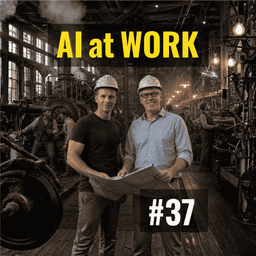
Why Your AI Pilot Is Just a New Steam Engine
<p>Most companies are repeating a 100-year-old mistake with AI and the history of factory electrification explains exactly why. In this conversation, Kevin Williams and Matt Graham trace the parallel between the factories that plugged in electric motors without redesigning their floors and the organizations today that are adding AI tools without touching the structures underneath them. The gains didn't come from the new engine. They came from tearing the building down.<br /><br />Kevin and Matt cover what that actually means for leaders making AI decisions right now including when rebuilding makes sense, when it doesn't, and what the...
