
Top Traders Unplugged
Top Traders Unplugged is where the world’s best investors come to share how they think - not just what they trade. Hosted by Niels Kaastrup-Larsen, the show goes deep into systematic trend following, global macro, and the principles that drive long-term success. No forecasts. No fads. Just real conversations with hedge fund managers, economists, authors, and allocators - revealing the timeless ideas, mental models, and risk frameworks behind robust performance. If you're building resilient portfolios, allocating capital, or simply looking to cut through the noise - this is your edge. Clear thinking. Deep insights. Real experience. 🎧 New episodes weekly. Explo...

10
SI416: 137 Years of Trend: What the Evidence Really Shows ft. Yoav Git
<p>Niels Kaastrup-Larsen and Yoav Git examine why trend following continues to endure despite decades of changing markets and persistent skepticism. They revisit AQR’s 137-year study of trend following, exploring diversification, volatility scaling and the behavioral and economic forces behind persistent trends. The conversation also turns to the mechanics of commodity markets, using the 2020 oil collapse to show how inventories, storage capacity and forced futures rolls can produce extreme price moves. Along the way, they discuss investor trust, systematic risk intervention, CTA implementation and why understanding market structure matters just as much as building the signal.</p><p>-----</p>...

GM106: What Happens When the Debt Finally Matters ft. Marvin Barth
<p>Marvin Barth joins Niels Kaastrup-Larsen and Cem Karsan for a wide-ranging debate about the Fed, inflation and the growing pressures on the US economy. Barth argues that central bankers have become too confident in models that cannot fully capture reality, while the conversation quickly turns to Kevin Warsh, Scott Bessent and the power of signaling in financial markets. From there, Cem and Marvin "clash" over austerity, debt monetization, populism and inequality before examining why inflation expectations may matter more than individual shocks. We round this super energetic conversation by exploring the coming historic El Niño, commodity disruptions and w...
SI415: Maybe This Is Just What Normal Markets Look Like ft. Alan Dunne
<p>Niels Kaastrup-Larsen and Alan Dunne examine how a changing macro regime is reshaping markets and the role of trend following. They discuss unusual U.S. intervention in the yen, mounting sensitivity around Treasury yields, and questions surrounding Kevin Warsh’s communication and the Fed’s credibility. Alan identifies three fractures defining the new regime: persistent inflation, growing debt sustainability concerns, and the erosion of institutional norms. They also explore why trend following has performed differently this decade, particularly during periods of bond market stress, before comparing AQR and GMO’s strikingly different long-term return assumptions and what they imply for po...
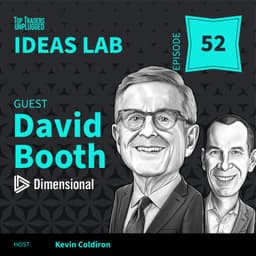
IL52: Why Staying Calm Is the Ultimate Investing Edge ft. David Booth
<p>In today’s episode we talk with a pioneer of modern asset management, Dimensional Fund Advisors founder David Booth. David founded Dimensional in 1981 and it has since grown to over $1 trillion in assets, making it one of the most successful quantitative investment firms in history. We talk with him about his new book, Stay Calm: Learn to Embrace Uncertainty in Investing and Life. We discuss his early career working on both the world’s first index fund and the first active quant strategy developed by finance legends Fischer Black and Myron Scholes. David explains why successful investing involves embracing unce...
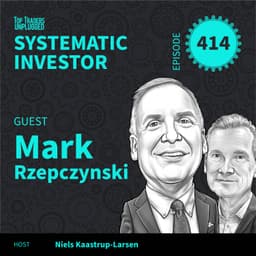
SI414: The Hidden Risks Beneath the Treasury Market ft. Mark Rzepczynski
<p>Niels Kaastrup-Larsen and Mark Rzepczynski examine the warning signs emerging beneath seemingly calm markets, from extreme single-stock moves and commodity shortages to growing strains in the U.S. Treasury market. They explore how leveraged hedge funds and basis trades have become increasingly important to Treasury liquidity, and why market plumbing can matter as much as price signals. The conversation then turns to the evolution of trend following, comparing different approaches to signals and position sizing, the benefits of combining methodologies, and why short-term trend strategies face structural challenges. Finally, Mark reflects on the legacy of quantitative trading pioneer Victor...
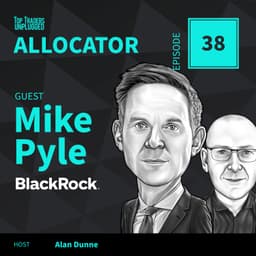
ALO38: Why the Old Rules of Diversification Are Changing ft. Mike Pyle
<p>Alan Dunne is joined by Mike Pyle, Deputy Head of BlackRock’s Portfolio Management Group, to explore how a supply-driven world is reshaping markets and portfolio construction. They discuss the transition from the demand-constrained 2010s to an era defined by scarcity, fiscal activism, geopolitical shocks and the immense capital demands of AI. Pyle explains why bonds may no longer provide the diversification they once did, why hedge funds and market-neutral strategies are becoming increasingly important, and how portable alpha can separate beta from return generation. They also examine AI productivity, equity valuations and what should replace the traditional 60/40 portfolio.</p>...
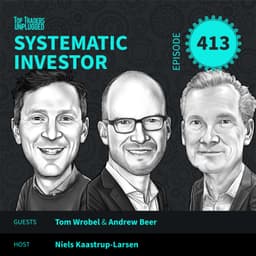
SI413: Why Trend Following Is More Than Crisis Alpha ft. Andrew Beer & Tom Wrobel
<p>Niels Kaastrup-Larsen is joined by Andrew Beer and Tom Wrobel to examine a remarkable period for systematic investing. They discuss how CTAs have navigated volatile moves across equities, commodities, currencies and rates while preserving strong gains, and why diversification has been central to that resilience. The conversation explores leverage, the renewed interest in managed accounts and portable alpha, alongside the growing distinction between trend and non-trend strategies. They also challenge the traditional framing of CTAs as crisis alpha, debate whether greater complexity actually improves returns, and examine the difficulties investors face when selecting managers and benchmarking an industry where...
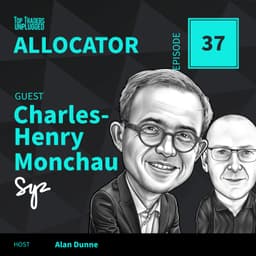
ALO37: Investing in the New World Order ft. Charles-Henry Monchau
<p>Charles-Henry Monchau joins Alan Dunne to discuss how geopolitics, artificial intelligence and structural economic shifts are reshaping global investing. They explore the AI supercycle, the changing balance between the US, China and Europe, sovereign debt, inflation, commodities and the future of asset allocation. Charles explains why investors should focus on long-term structural themes rather than short-term market noise and why the biggest opportunities may lie beyond the current AI infrastructure boom. The conversation also examines Europe’s competitiveness, China’s innovation strategy and the risks that could define the next phase of the investment cycle.</p><p>-----</p><p>50...
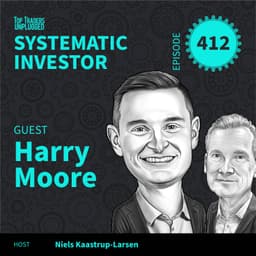
SI412: Portable Alpha: Asking the Questions That Matter ft. Harry Moore
<p>Niels Kaastrup-Larsen and Harry Moore explore the latest developments in trend following, the AI investment boom and why diversification matters most when markets come under pressure. They discuss CTA performance, market dispersion, portable alpha, cash efficient portfolio construction and the role of trend following during major market drawdowns. The conversation also examines how artificial intelligence is transforming quantitative research, the practical challenges of portfolio implementation and new research linking classic Turtle Trading principles to modern portfolio theory.</p><p>-----</p><p>50 YEARS OF TREND FOLLOWING BOOK AND BEHIND-THE-SCENES VIDEO FOR ACCREDITED INVESTORS - CLICK HERE</p><p>-----<...
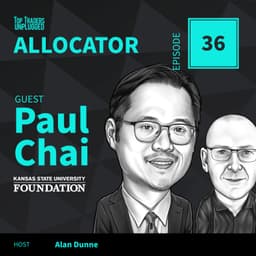
ALO36: The Endowment Playbook for Long-Term Investing ft. Paul Chai
<p>Paul Chai joins Alan Dunne to discuss what it takes to manage a perpetual investment portfolio designed to support future generations. As CIO of the Kansas State University Foundation, Paul explains how disciplined asset allocation, thoughtful manager selection and strong governance create resilient long-term results. The conversation explores endowment investing, private markets, hedge funds, portfolio construction and the importance of building a decision-making culture where diverse perspectives are encouraged. It is a wide-ranging discussion about investing with humility, managing uncertainty and creating an investment process that can endure through changing market environments.</p><p>-----</p><p>50 YEARS OF...
