
Big Questions with Cal Fussman
As a bestselling author, speaker and one of the greatest interviewers of this generation, Cal Fussman has sat down with some of the world's most influential individuals: Muhammad Ali, Mikhail Gorbachev, Serena Williams, Jeff Bezos, Jack Welch, John Wooden, Al Pacino and hundreds of others, digging deep into their hearts and delivering their wisdom to the rest of the world. Now, in Big Questions, Cal continues his journey. Uncovering the heart, head, and soul of his guests in thoughtful, deep and entertaining conversations.

10
What? A Cowgarithm?????
<p >What do Clint Eastwood, a Montana snowstorm, and a herd of cattle have to do with artificial intelligence? Cal starts with the romance of the old cattle drives and the sound of the old show Rawhide, remembers the pull of the open range and a freezing night that made him question whether he'd even make it to the ranch alive. Then he finds something on the internet that stops him cold. No cowboys. Just cows . . . being guided by AI. The technology inside a cow collar is being called a "Cowgorithm." That discovery leads somewhere unexpected—into a late-night experiment wi...

The Theater That Taught Me How To Survive AI
<p>Cal Fussman walks into a theater expecting to see a documentary about artificial intelligence. He walks out with a new understanding of the future of work. Through a surprising connection to Super Mario, a landlord named Mario Segale, and the power of human serendipity, he uncovers a simple truth: The people who adapt will thrive. The ones who don't may disappear. If you've ever wondered whether AI is something to fear—or something to grow with—this story will change how you see what's coming next.</p>
Founder vs. Cancer: A Real-Life Hail Mary
<p>After watching Project Hail Mary, Cal sees more than a sci-fi story about saving the stars—he sees a blueprint for how humans might survive the age of AI. That insight leads him to a real-life story even more extraordinary. When tech founder Sid Sijbrandij is diagnosed with a rare, aggressive cancer, the traditional medical system eventually runs out of answers. Most people would accept that outcome. Sid does the opposite. He treats his own disease like an open- source problem—gathering data, building a team, and chasing solutions across the globe with the same mindset that helped build GitL...
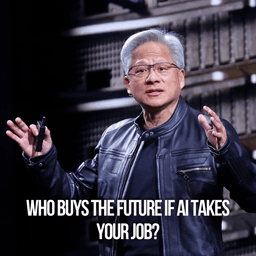
Who Buys the Future If AI Takes Your Job?
<p>The headlines keep leading us to believe that AI is coming for your job. But Cal Fussman poses a question no one else is asking. If humans stop earning… who's left to buy what AI and the machines produce? As companies race toward automation, Nvidia's Jensen Huang insists new human jobs will be created. Cal believes him. The catch? Many of those jobs may not exist just yet. This episode points to the evolution of Big Questions into something bigger. Big Questions: The Future of Work. A place to step away from the dystopian drumbeat and be excited about wh...
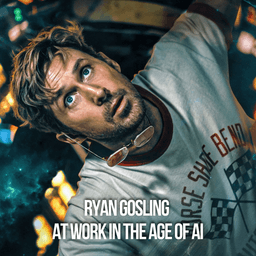
Ryan Gosling At Work In The Age Of AI
<p >Cal plans to go out to the theater to watch the actor save the universe in Project Hail Mary. Cal doesn't know exactly what's going to happen, but he sees the plot as the perfect metaphor for how humans must look at the work in the age of AI. Gosling plays a middle school science teacher who wakes up in a rocket and can't remember, only to use the skills he has to save the universe. We're all going to have to step and find the best in ourselves as we look at work going forward. The movie may...

Beating The Airport Security Lines
<p >An electric razor is mistaken for a bomb. Security lines explode in Houston, New Orleans and Charlotte. TSA workers are on the job without pay. So Cal flips the script. Show up hours early and turn airport stress into productive work time that can create a bestseller and more. It's not whistling while you work. But in March 2026 . . . it works.</p>
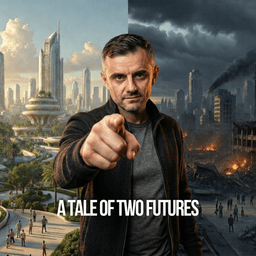
A Tale Of Two Futures
One future says the most human people win. The other says your job costs too much. Gary Vaynerchuk believes that as we become more "AI-ed out," the most human brands and people will dominate. Citrini Research predicts something far colder: Within two years, a Claude agent may do the work of a $180,000 product manager for $200 a month. And when that happens? The top 10% may control over half of all consumer spending. So which future is real? The one where humanity becomes more valuable? Or the one where intelligence becomes a utility? Cal gives you a closer look at both.
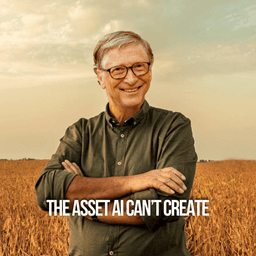
The Asset AI Can't Create
<p >One of the richest men in the world quietly became the largest private owner of farmland in America. Why? Is Bill Gates retreating from technology? Or is he making the most important AI bet of all? In this episode, Cal reads from an article that reframes everything. Gates' farmland strategy isn't nostalgia. It's a blueprint for the next economy. AI will build the digital world for free. But every digital system still depends on something finite. Land. If you want to understand where the 21st-century fortunes will be made — and what that means for your future — this episode is for...
Something Big Is Happening
<p>As the world worked on last week, something exploded online. An article about AI by Matt Shumer was posted on X. It has already been downloaded more than 80 million times. The title? Something Big Is Happening. The implications couldn't be more personal. Your job. Your family. Your future. Instead of summarizing it or debating it, Cal does something simple and Old School on Big Questions. He reads it aloud. Not as commentary. But as a marker in time. If you haven't come across Something Big Is Happening, you might want to look up from your work and listen.</p>
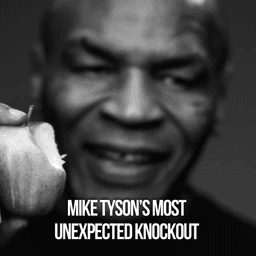
Mike Tyson's Most Unexpected Knockout
Fifteen of the 66 Super Bowl ads this year featured artificial intelligence. Then Mike Tyson appeared on screen. . .and ate an apple. No algorithms. No spectacle. Just a former heavyweight champion telling America to stop consuming what's destroying it. In a culture addicted to speed, processed food, and machine-enhanced everything, Tyson's message was about discipline. Bringing up a Big Question: What if the most disruptive force in 2026 isn't artificial intelligence? What if it's human restraint? Cal looks at why the most impactful ad during the Super Bowl was the simplest one.
